

New evidence suggests that water may not play as big a role in the dark streaks on Mars' surface as previously thought.
The new findings published in Nature Geoscience (via CNET) reference the recurring slope lineae (RSL), dark streaks on the planet's surface, which had previously been thought to be caused by seasonally shifting liquid water, but now seem to be caused by shifting sand and dust.
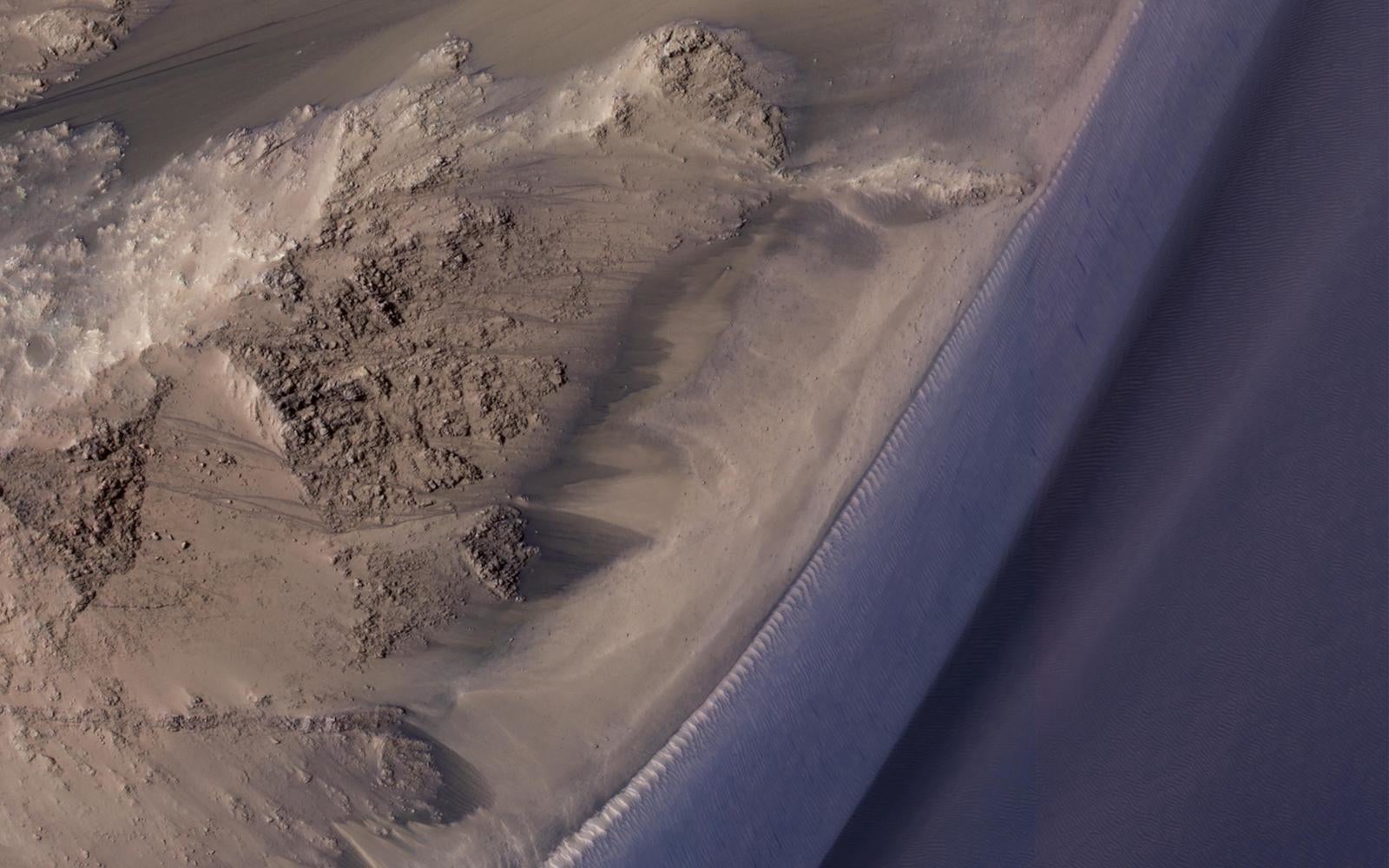 NASA/JPL-Caltech/UA/USGS (via CNET)
Continue reading…
Continue reading...
The new findings published in Nature Geoscience (via CNET) reference the recurring slope lineae (RSL), dark streaks on the planet's surface, which had previously been thought to be caused by seasonally shifting liquid water, but now seem to be caused by shifting sand and dust.
 NASA/JPL-Caltech/UA/USGS (via CNET)
Continue reading…
Continue reading...