

Valve might have kicked off the whole portable PC craze with the Steam Deck, but these days it's far from the only game in town. Handheld rigs are popping up everywhere, and the competition is getting spicy. Once upon a time the Asus ROG Ally X stole the crown with its zippy performance, speedy memory, and a battery that actually lasted a decent stretch.
Now though, a new contender is flexing its muscles: the Lenovo Legion Go S (Z1 Extreme, SteamOS). And with the Xbox Ally X moving into the scene, the road ahead is looking packed with choices. So whether you're eyeing off the Deck or sniffing around for a worthy alternative, we've rounded up some cracking handheld PCs that can smash through the latest PC titles - just don't expect them to tackle Doom: The Dark Ages without a fight.
TL;DR – These Are the Best Handheld Gaming PCs:
Instead of lugging around a chunky gaming laptop, handheld PCs keep things nice and compact, letting you fire up a game pretty much anywhere. Sure, they're smaller than a tower or even a laptop, but that doesn't mean they're pushovers. Plenty of these little beasts have the grunt to run heavy hitters like Cyberpunk 2077 without breaking a sweat. And if the small screen wears thin, you can always drop one into a Steam Deck dock and beam the action straight to your big telly.
We're right on the edge of a handheld gaming shake-up, and we've had the pleasure of testing a fair few of these pocket powerhouses. Here are the four we reckon deserve a spot on your radar.
This guide contains contributions by Jacqueline Thomas
1. Lenovo Legion Go S (Z1 Extreme, SteamOS)
The Best Handheld Gaming PC
When Lenovo first rolled out the Legion Go S in February 2025, it was rough going. The launch model was saddled with a flimsy Z2 Go chip that struggled to play nice with Windows, and the whole thing felt like a dud. To make matters worse, Lenovo slapped Windows 11 on it and bundled in 32GB of RAM, pushing the price tag up to match - or even top - the original Legion Go. Not exactly a winning combo. Luckily, Lenovo wised up and relaunched the Go S with a Z1 Extreme under the hood and SteamOS baked in.
Now, it's still not what you'd call cheap. The current model will set you back decent monies, but that's only a smidge more than the Asus ROG Ally X - which, funnily enough, ended up running a touch slower in our IGN testing. The kicker? In synthetic benchmarks, the SteamOS-fuelled Legion Go S outpaced the Ally X by up to 9%. Pretty tidy, especially considering the Ally was wearing the performance crown before this beast showed up.

Let's be honest, the Steam Deck is the giant shadow looming over every handheld PC chat. Three years on and it's still a fan favourite, mostly because it's dead simple to use and costs about half what you'd shell out for the Go S. That said, Lenovo's machine fights back with a sharper display and nearly double the grunt. It can push Baldur's Gate 3 at a steady 60fps, which the Deck just can't manage right now. Whether that extra punch is worth the price hike comes down to what you value most.
Of course, a handheld isn't just about horsepower. It has to feel good in the hands, and surprisingly, despite being one of the chunkiest options around, the Go S nails comfort. Rounded edges give you a nice grip, and the textured back means it's less likely to do a runner mid-boss fight. The screen deserves a shout too. It's one of the best LCD panels you can buy, showing that OLED isn't the only way to get a cracking picture in 2025. Sure, the Steam Deck OLED pops with a bit more colour, but the Go S still makes just about any game shine. With Microsoft and Asus lining up the ROG Xbox Ally X for later this year, the Legion Go S is currently the handheld champ.
2. Asus ROG Ally X
The Best Windows Handheld Gaming PC
The Asus ROG Ally X we put through its paces last year might pack the same AMD Z1 Extreme chip as the first Ally, but don't be fooled as Asus has tweaked enough under the hood to make this the best Windows-powered handheld you can grab right now. They've boosted the RAM to 24GB of LPDDR5 running at 7,400MHz, a healthy jump from the old model's 16GB. That faster memory isn't just for show either (in testing it delivered a tidy 12-15% bump in performance).
The chassis got a little chunkier and a touch heavier, but Asus had good reason. The Ally X now houses a cooler that's actually effective and a battery that's double the size of the original. Translation: you can game for hours before scrambling for a wall socket, and the display won't fry your fingertips like it used to during marathon sessions. Throw in a lap pillow and you won't even notice the extra heft. Asus also ditched the clunky Mobile XG port in favour of a second USB-C with Thunderbolt 4 support, and they finally swapped out that dodgy MicroSD slot for a sturdier one that should last longer than a couple of card swaps.
3. Valve Steam Deck
The Best Budget Handheld Gaming PC
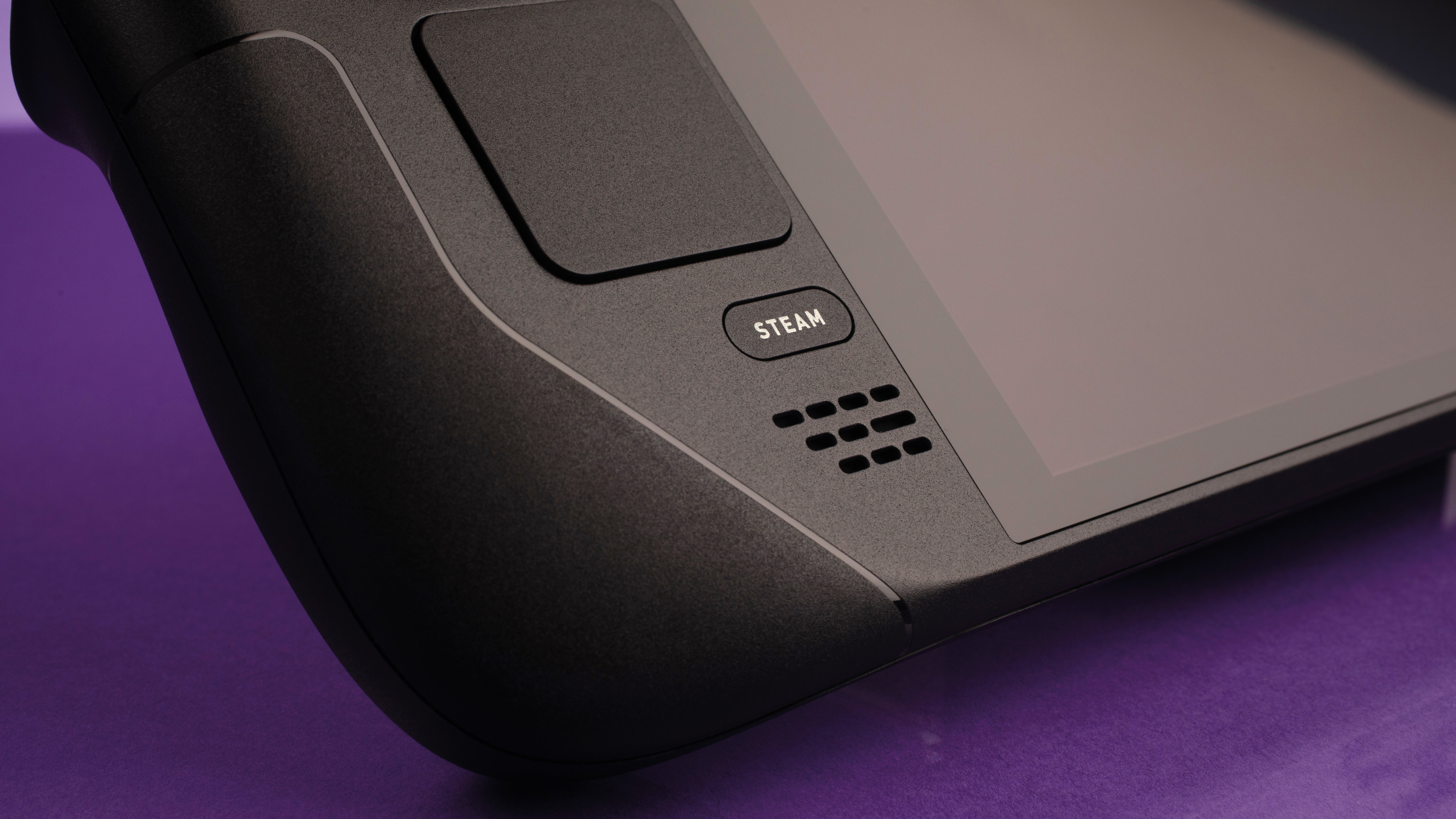
Valve might have kicked off the handheld PC craze with the Steam Deck, but it's worth remembering that it doesn't actually ship with Windows. Instead, it runs on Valve's own SteamOS, and with the help of Proton, it can handle a huge library of PC hits like Cyberpunk 2077 and Forza Horizon 5 without a fuss. If you're dead set on Windows, you can boot it through the USB-C port, but honestly, SteamOS is part of what makes the Deck so smooth to use. Toss in its excellent control setup and you've got one of the most comfortable handhelds around.
Of course, you've also got the Steam Deck OLED to consider. It keeps the same 1200x800 resolution, but the brighter panel and richer colours make a world of difference. On top of that, the OLED model gives you better battery life, a higher refresh rate, and more room for your games than the old 256GB LCD version. It's a proper step up without losing what made the Deck so good in the first place.
Be sure to check out the best Steam Deck accessories and Steam Deck docks to pair with the powerful portable.
4. Lenovo Legion Go
The Best High Performance Handheld Gaming PC
When you're shopping for a gaming PC, the trick is finding that sweet spot: beefy performance wrapped up in a package that feels worth the price tag. Handhelds are no exception, and that's where the Lenovo Legion Go struts in. Measuring 29.8 cms across and 13 cms tall with the controllers latched on, it's a whopper (but that size comes courtesy of its huge display).
Unlike the Steam Deck or Asus ROG Ally Z1, which borrow heavily from the Switch, the Legion Go goes all-in with an 8.8-inch 1600p screen, basically a Windows 11 tablet with joysticks bolted on. Despite its size, Lenovo managed to keep it fairly light at 640 grams, though anyone with smaller mitts might struggle to get comfy. The sharp display does throw up a catch: running at native 1600p can push the Z1 Extreme chip a bit hard, meaning you'll likely need to tweak settings or drop resolution for smoother play. If fiddling with menus isn't your thing, this might not be your match. But if you're a seasoned PC gamer, the Legion Go's blend of flexibility and gorgeous visuals makes it a proper handheld built for the hardcore crowd.
Handheld Gaming PC FAQ
Should I buy a handheld gaming PC or a gaming laptop?
Whether you go for a handheld PC or a gaming laptop really comes down to how - and what - you want to play. Handhelds have the edge when it comes to battery life, portability, cooling, and overall efficiency, making them great travel companions. The trade-off is they're built to handle games only up to a certain level of intensity.
Laptops, on the other hand, stuff in the latest GPUs, CPUs, and plenty of RAM, so they can chew through even the most demanding titles. The catch? You usually pay for it with extra heat, shorter battery life, and a much higher price tag. That said, gaming laptops pull double duty - they're not just for games, but also solid workhorses for editing, productivity, and whatever else you throw at them.
What’s the best Steam Deck alternative?
The Asus ROG Ally X stands tall as one of the sharpest Steam Deck alternatives out there. It's got a slick design, runs like a dream, and keeps things simple on the user side. Best of all, since it's running Windows 11, you get access to your full PC gaming library without any hoops to jump through.
How does the Switch 2 compare to the Steam Deck?
The Switch 2 is delivers better performance than the Steam Deck, according to our tests. Check out our in-depth comparison to find out more.
Sign up to get the best Aussie gaming deals sent straight to your inbox!
Continue reading...