

VeeX Pod
Today I’m bringing you my very first review of this brand: Veepon. Specifically, it's the VeeX Pod, though I’ll be covering the Kuka AIO very soon—a device I’ve been looking forward to for a long time.
The VeeX is a pod-style device with a maximum output of 40W, a simple and elegant aesthetic, a 1000mAh battery, and a few other features.
Thanks to Veepon for making this review possible. You can visit their website to learn more about the VeeX.
The VeeX is a pod-style device with a maximum output of 40W, a simple and elegant aesthetic, a 1000mAh battery, and a few other features.
Thanks to Veepon for making this review possible. You can visit their website to learn more about the VeeX.
Packaging
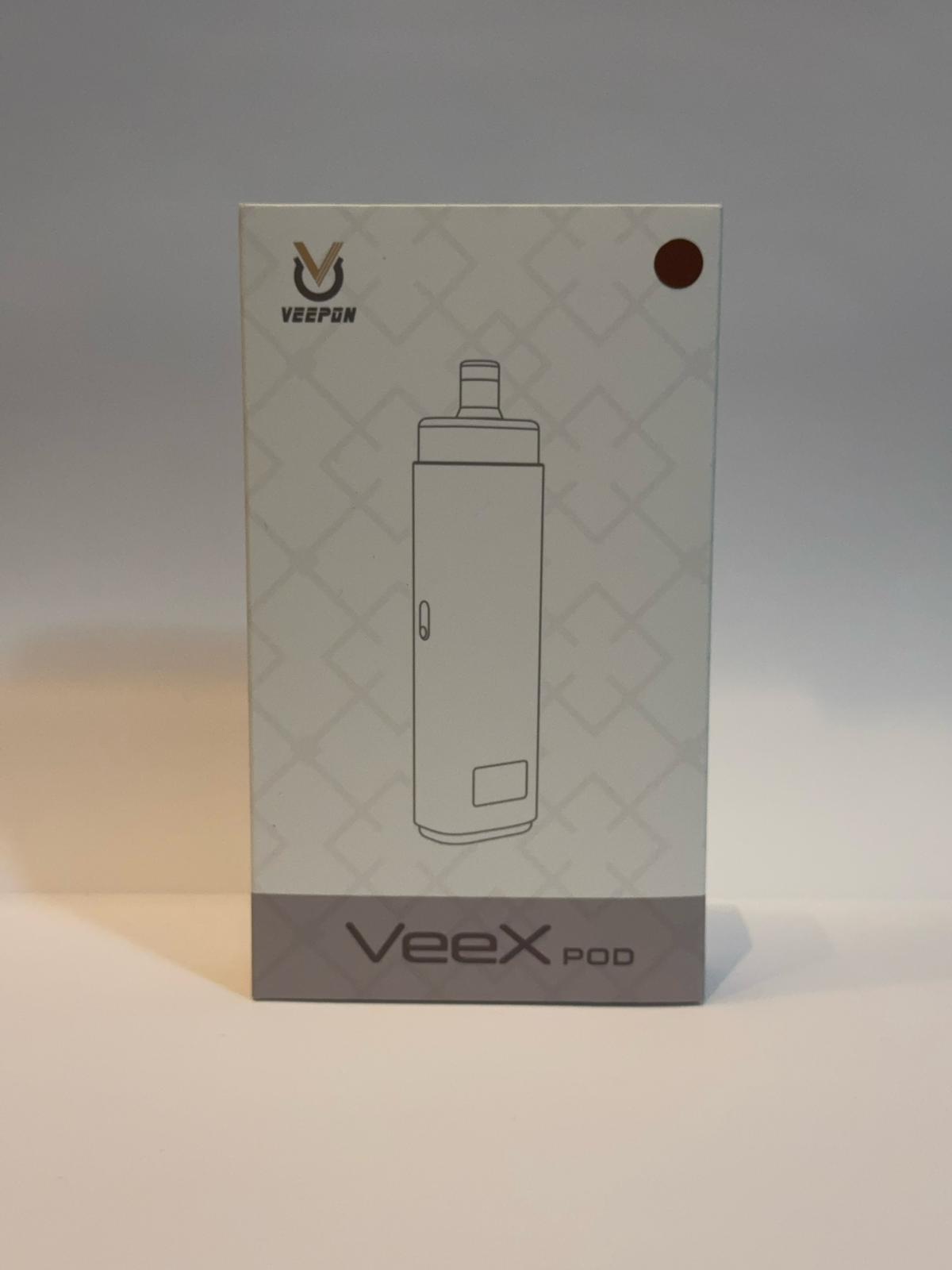
The product comes in a white, rectangular box. In the top left corner, we can see some Veepon branding. In the center, there is a small sketch of the device itself. At the bottom, you can clearly read the device model.
The design is kept quite simple, though I don’t dislike it; plus, the background of the front packaging features some rather elegant square shapes.
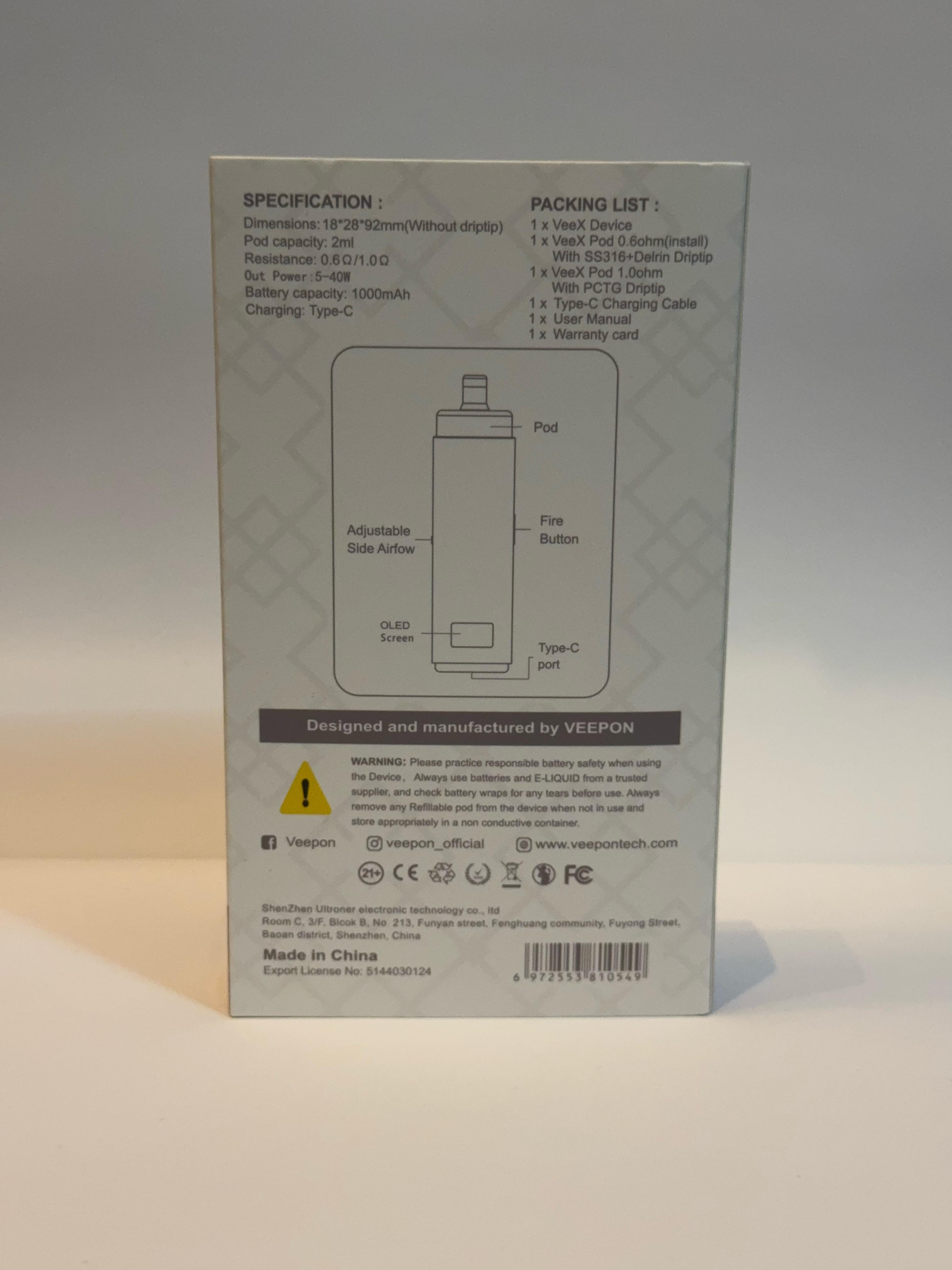
On the sides, we find some of the device's features, but the back is where the bulk of the information is found. We can see a brief list of the main specs, the contents of the box, a diagram showing the parts of the VeeX, and finally, some warnings and contact addresses.
Inside the box, we find:
The product comes in a white, rectangular box. In the top left corner, we can see some Veepon branding. In the center, there is a small sketch of the device itself. At the bottom, you can clearly read the device model.
The design is kept quite simple, though I don’t dislike it; plus, the background of the front packaging features some rather elegant square shapes.
On the sides, we find some of the device's features, but the back is where the bulk of the information is found. We can see a brief list of the main specs, the contents of the box, a diagram showing the parts of the VeeX, and finally, some warnings and contact addresses.
Inside the box, we find:
- 1* VeeX Device
- 1* VeeX Pod 0.6Ω (Delrin Tip)
- 1* VeeX Pod 1.0Ω (PCTG Tip)
- 1* Type-C Charging Cable
- 1* User Manual
- 1* Warranty Card
Device
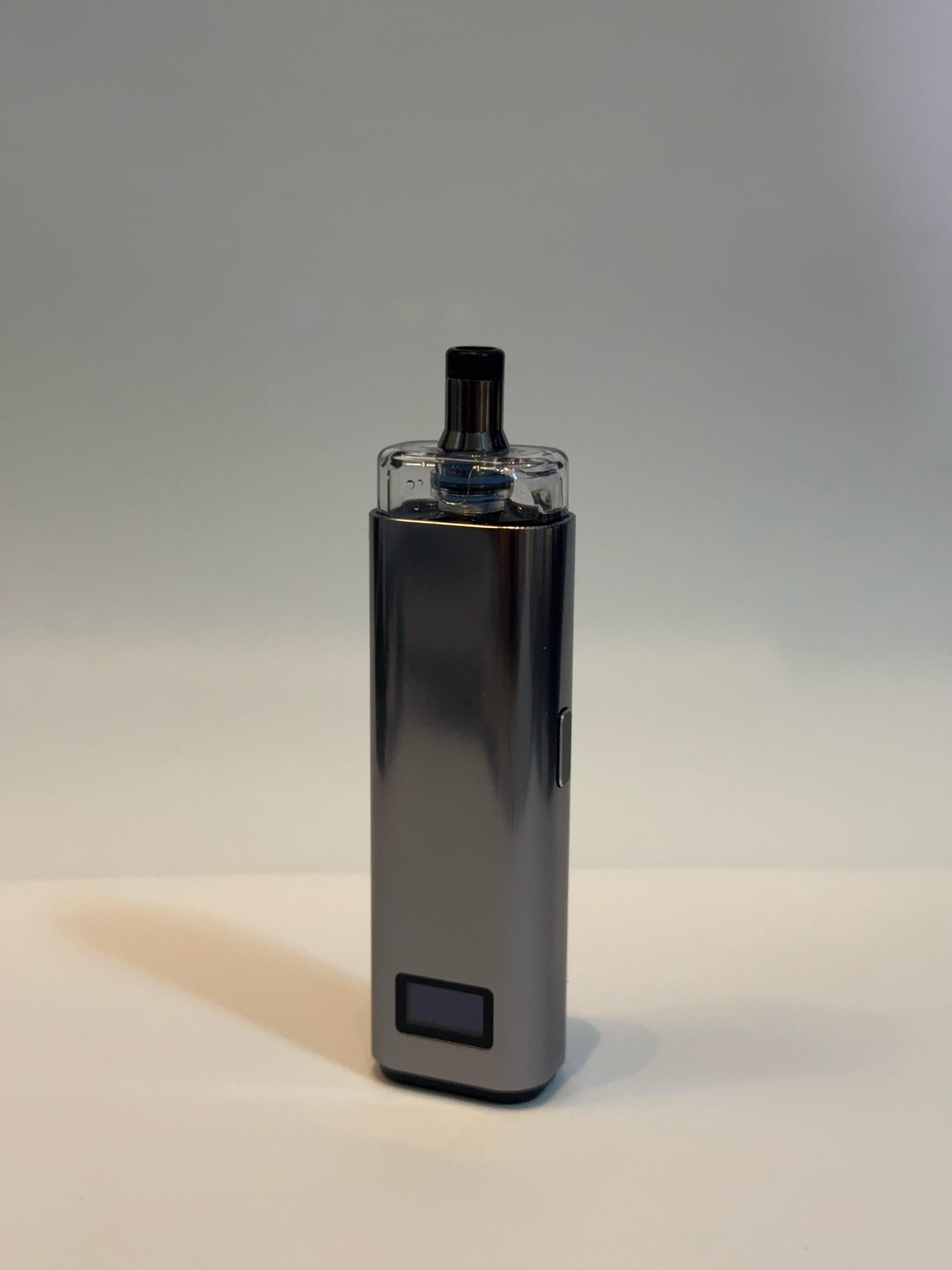
From this image, you can see the full front of the device. Right now, it has the Delrin Tip installed, which looks very elegant and is also completely interchangeable with the PCTG one or any other 510 Drip Tip.
To start, let's talk about the materials used. The body of the device is constructed entirely from an Aluminum alloy, making it very lightweight. However, something I'm not entirely convinced by is the color finish; I think this 'chrome' look makes it appear a bit inelegant, and I also get the feeling that it scratches or chips easily from drops or just sitting in a pocket. The cartridge, as is usual, is made of PCTG.
The shape of the VeeX is really simple; it comes as a rectangular stick with absolutely all edges rounded, which makes it very comfortable in the hand and aesthetically simple yet attractive. At the bottom, we can see the screen—a very simple and small 0.49-inch display—but it's more than enough for this device and the customization it offers regarding vaping parameters. In the next image, I’ll show it turned on, and we’ll discuss the information it provides.
To start, let's talk about the materials used. The body of the device is constructed entirely from an Aluminum alloy, making it very lightweight. However, something I'm not entirely convinced by is the color finish; I think this 'chrome' look makes it appear a bit inelegant, and I also get the feeling that it scratches or chips easily from drops or just sitting in a pocket. The cartridge, as is usual, is made of PCTG.
The shape of the VeeX is really simple; it comes as a rectangular stick with absolutely all edges rounded, which makes it very comfortable in the hand and aesthetically simple yet attractive. At the bottom, we can see the screen—a very simple and small 0.49-inch display—but it's more than enough for this device and the customization it offers regarding vaping parameters. In the next image, I’ll show it turned on, and we’ll discuss the information it provides.
The 0.49-inch screen displays the following information:
- Wattage.
- Resistance in Ω.
- Puff counter.
- Battery indicator with 4 bars.
As you can see, the information is sufficient for a device of this style and nothing else is really needed; it keeps things simple and to the point.
On one side, we find the fire button, which also serves to adjust the wattage, among other things:
- 5 clicks to turn the device on or off.
- 3 clicks to enter wattage adjustment mode; it increases in 0.5W increments up to the recommended maximum for the coil, then resets to the minimum.
The functions, once again, remain simple and concrete—wattage adjustment and not much else. You don't really need much more for a POD of this style.
As for the button, it is made of the same aluminum alloy as the body and protrudes slightly so it can be pressed easily. However, something I don't like is the feel and click of the button; sometimes I can't tell if I've pressed it properly or not. It has a travel that is too short and irregular; it doesn't feel linear or smooth. In short, it doesn't seem to be of adequate quality to me.
As for the button, it is made of the same aluminum alloy as the body and protrudes slightly so it can be pressed easily. However, something I don't like is the feel and click of the button; sometimes I can't tell if I've pressed it properly or not. It has a travel that is too short and irregular; it doesn't feel linear or smooth. In short, it doesn't seem to be of adequate quality to me.
On the other side, we find the airflow inlet, consisting of a large opening. Adjustment is handled via a slider that offers good resistance and a nice feel this time; I haven’t noticed it moving on its own while in my pocket or anything like that.
When fully closed, you can achieve an MTL, but for me, the draw isn’t entirely satisfactory for MTL; I don't think it’s its strong suit. However, the RDL draw is satisfactory, even if it falls short of being good for MTL.
When fully closed, you can achieve an MTL, but for me, the draw isn’t entirely satisfactory for MTL; I don't think it’s its strong suit. However, the RDL draw is satisfactory, even if it falls short of being good for MTL.