

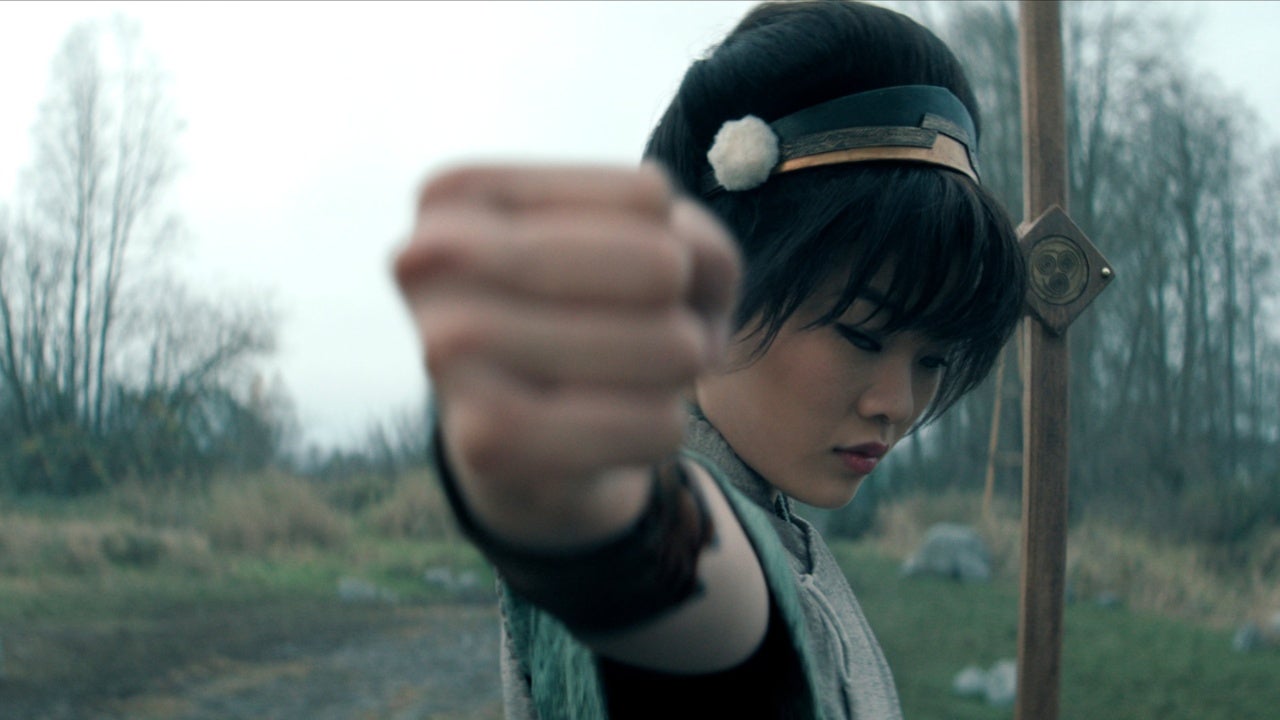
Netflix is currently gearing up for one of its most eagerly anticipated returning shows of 2026. Avatar: The Last Airbender Season 2 is fast approaching. This new chapter of the live-action series draws in many iconic characters and elements from the animated series, not least of which being the long-awaited debut of the gruff earthbender Toph Beifong (Miya Cech).
As a primer for this weekend’s IGN Live festivities, we spoke with Executive Producer and Writer Christine Boylan and Executive Producer and Director Jabbar Raisani, the two people responsible for guiding the series in its second and third seasons. Read on to learn more about the debut of Toph, how the series streamlines the plot of the cartoon, and what to expect from Zuko and Azula’s simmering family drama.
IGN: The two of you stepped into bigger roles for Season 2, and that was a big change behind the scenes. How different would you say your experience has been working on the show this time, and did you come into Season 2 with any major goals in mind?
Jabbar Raisani: With Season 1 postproduction, there was an opportunity there to really shape the show in a way that we really tried to deliver something that audiences found familiar but felt elevated, and I think going into Season 2 was like, how do we continue that feeling of elevating this show for live action and really bringing the audience something that felt grounded? And for us, I think the opportunity to go in from the very beginning with Seasons 2 and 3, a lot of the discussions that we had together were, we want to make a show that feels more like a historical drama look and feel.
So it was a lot of that, like how do we make this feel like a real living, breathing place and not like something that has been filmed with actors but created in a computer. We used the Volume in Season 1, which I think we had some great successes with, but for us it was like we really want to be in real places and real locations. As a director, I much prefer being in a real space where I can look around and see where the sun is and take out my little chart and figure out where the sun's going to be and say, "Okay, we're going to shoot like this," and it's just much more what I'm familiar with, and I find it easier on set to work in a space in those ways.
With the Volume, it's a whole other challenge that can yield some great results, but for me, the real world is the best results, and I think that applies for our visual effects as well. When you start with something that is real, whether it be location or a giant set build, there might be some blue screen or green screen there, but there's so much in camera that it allows them to say, "Okay, that's what the light was doing on that day, and this is all in camera, and we're just adding a giant sea serpent to it." So it just let us make a show that was, I think, from the writing point all the way through the final delivery of visual effects, something that felt grounded in reality that had elements of fantasy versus pure fantasy.
Christine Boylan: Yes, and we got super lucky because Jabbar and I worked together before we even met each other, which was amazing, because he directed the episode I wrote in season one, and because of COVID I was not on set during that time. In my many years of doing television, I'm almost always on set for my episode and other people's episodes, but I wasn't there during that time. I was just so pleased with how it came out, so I was like, "Oh, this guy's really good."
By the time we actually met in person, it was already like, “Okay, you are the directing EP, you are the writing EP, this is happening.” It was already, we had already signed on. So we met and we're like, "You kind of see the show this way, I kind of see the show this way." "Oh, it's the same thing, okay, great." Because we look at the animated series, it starts in a beautiful place, it matures and it matures, it just sort of opens like a flower. And this show is not a one-to-one. It's a completely different kind of retelling of the same legend, but we wanted to mirror that growth, and I think we got to do that visually and hopefully in the writing and in the VFX as well.
IGN: I imagine one of the challenges of making a live-action Avatar series specifically is the fact that you've got a story about younger heroes, but you have a cast that's constantly aging. So I'm curious how Season 2 deals with the real-world time gap between these two seasons.
Boylan: We very much, like the real locations and the real sets, we said we want to film in the weather, we want to- whatever gets thrown at us, we will accept because that is what making a real show with real human people is. And part of that is when you're working with teenagers, they're going to mature. And I wouldn't even say age. I think Gordon still has a baby face even at the end of Season 3, but there is definitely a time gap in between Season 1 and Season 2.
We loved that in the writers' room. We loved the idea of getting to tackle that. We tell a little bit of what went on in that time gap. Certainly, there was a big battle at the end of Season 1, and there's a lot of fallout after that battle emotionally and physically. There's a lot of healing that has to happen, and some of that happens off-screen and some of it happens on-screen. So we got to give a little break there. What I really want is for the audience to step up and meet us where we're at. I come from theater. I believe in the audience giving and taking.
I don't ever look at the audience as consumers or people who are just taking stuff in. I think they are playing with us as we are playing with them. So I'm hoping that they are looking at this time jump as a way to fill in some stories that they get to miss. We don't get to tell every single story from the animated series, which I sort of love. When I was starting out and writing fan fiction, I always wrote fan fiction about those moments in series that you didn't get to see. And later on, when I wrote comics, I wrote some Star Trek comics about those moments in Star Trek and in Next Gen that we didn't get to see in between episodes. So I want that fan fiction. I want all of that. I want that beautiful creative participation from the audience, and the time jump gives us one area to do that. In between episodes, there's lots of little spaces for fans to come in and be creative and fill in.
Raisani: I think we kept it really simple, too. It's in between seasons. Was it a year? Was it less? Was it a little more? We don't get specific. Things happen that we mention in dialogue a little bit, but it's really, he was older, he learned to waterbend, and then we kind of start the adventure. And it's really about the audience catching up and inventing what you would like that story to be. But we really get the season propelling towards what's happening in Season 2 and the adventure our gang's on. I think too, we got the benefit of they are older as actors, as performers. They had time to work on their craft. The performances we got in Season 2 and Season 3, I think, are amazing. And I think everybody really went to work between Season 1 and Season 2, and they all came back stronger. I think all of us really just tried to learn everything we could from Season 2, level up Season 2, and really bring our A-game.
Boylan: The cast worked very hard. They were doing a lot of reading, they were doing a lot of watching films and things that we had recommended. They were working physically, getting ready for this, and they were perfecting their acting craft. I'm just really grateful for them. Yeah.
IGN: Book Two of the animated series is a pretty dense story, and you've got these major elements like Ba Sing Se and the Dai Li coming into play. How did you go about trying to translate and streamline that story for this new version?
Boylan: I think we knew that we could not tell every single piece of every story. We started out being really specific about scenes. We started out with scenes you want to see, things we really wanted, things we really needed. We filled a board with all of those, and that included stuff that didn't get done in Season 1, stuff that we could do or pull from Season 3. We just made a big board, and then we went through character by character and looked at character growth because that is what drama is. It's character growth, and growth is not a straight line. You grow forward, you double back, you fall back, you move forward. It's a journey. So following each character, the choices they make, and looking at each character's story, what set pieces, what areas would best showcase that character growth, no matter what, character always led everything that we did in the writer's room. So things that were left out were just not going to service the growth of the character.
We didn't have time for them. There's plenty of stuff we'd love to do. I have an entire Season 4 in my back pocket I'd love to get into, but things are what they are. So I think always sticking to character and making it grounded and real. You are 15 years old, you are an airbender, your entire society has been lost. That's real. Okay, now what do you do? That's how we moved from moment to moment, and everything we could bring in that we love from the animated series, we brought in. But we always looked at this as live action can do so many things that animation can't do, and animation can do so many things that live action can't do. And we love the animated series so much. Everyone in the writer's room is a huge fan, everyone on the crew is a huge fan. We just wanted to do our telling of this legend that hopefully the audience will come with us and enjoy.
Raisani: Look, I think as huge fans of the animated series, it's always hard. We want everything in. But you can't have everything. So we would always try to find clever ways to put things in the world, even if we couldn't tell that whole story. Like in Season 1, where there's a Flopsy in Bumi's palace, like a statue. We couldn't tell that story. We wanted that there. We tried to find ways of incorporating things via dialogue or paintings. If you look around our sets, Michael Wiley designed all these amazing sets, and we would tell him, "Hey, we want to put this picture in this set so that way we can reference this thing from the animated series we can't have in the show." We were just trying to find all these ways to put Easter eggs throughout the show.
So I think if people watch closely, yes, they may not get every scene they wanted. We didn't get every scene we wanted from the animated series in, but we really tried to put little Easter eggs and put little things in that fans could understand, that we couldn't put it in, but we acknowledge we love that too, and distill the show down to the version of the show that we could make. This is a live-action series. Everything animation does well, live action doesn't necessarily do well. There are certain things that live action shouldn't attempt because it just won't work the way it was in the animated series. And that's why I love the animated series is also on Netflix, because I can go back and watch that. I love it. I still re-watch it.
Boylan: This show is made by fans for fans. That's the thing. And if you look on my Netflix right now, and also my other things, like 90% of what I'm watching right now is anime because we're in a peak anime moment. There's stuff I wouldn't attempt in live action even if I were offered the property because it's like, you can't really do that. This was a very special opportunity to tell what is an eternal legend, just with a very grounded human way in.
Raisani: Yeah, when I first found out Netflix was doing Season 1, I was like, I was already a fan of the animated series. Like, I don't know how they're going to make that show. But I want to be involved in it. If they're going to try it, I want to try it too, but that's crazy to attempt.
IGN: So Toph is probably the most significant new character that joins the cast this season, and I imagine that's a very difficult role to cast between her blindness, her physicality, and her personality. What were you looking for when it came to choosing an actress to fill that role?
Boylan: So we've both been in some big casting searches in our careers. I've never been in one this extensive. Jenny Ju, our casting director, unbelievable talent at finding talent. She's really terrific. We saw so many people. When Miyako walked in, she walked in like an earthbender, and my gut, I just got this feeling in my gut going, "That's Toph." So yeah, obviously we went through so many reads and so many chemistry reads, but your gut's your gut, right?
Raisani: It was an extensive search. I think Jenny looked at over 6,000 submissions. I think she whittled it down, and we probably saw 80 to 100. And then from there, we did callbacks to the producer number, and then, yeah, like you're saying. When we got the chemistry reading, it was like Miyako was just Toph. When they were done with that session, we're like, "Well, we know who's Toph." There was no question.
IGN: And how much does she sort of shake up the core group dynamic this season? Do you feel like she was sort of a missing piece of the puzzle on the show?
Boylan: I think she shakes up the core dynamic in exactly the right way. When we find this group, they've been through a lot. The gang is young, it's the three of them, but they have been through so much together. It's the three of them and Appa and Momo. I don't want to leave out Appa and Momo, but they've been through so much. And then they are looking for an earthbending teacher. They don't know what they're going to encounter. They don't think they're going to have another person their age join the group and be this blunt, shameless truth teller. She's just so funny. She's so wicked. She's brilliant. Writing for Toph was one of the funniest things. It was a pleasure in the writers' room. We had so much fun.
And when we brought Joe Strechay on, who was our blindness consultant, he worked with Miyako on movement and all kinds of things. He also worked with production, he worked with directors, he worked with the writers a lot because we wrote a lot of jokes. We were like, "This is too far," and Joe goes, "Oh no, you can go way farther than that." So it was pretty great. I love developing the relationship, that friendship between Toph and Sokka. That was really important to me, that that happened. The way she relates to each one of the members of the gang and how she doesn't trust easily, but when she does, she trusts fully. Those things are so beautiful to watch unfold.
Raisani: I think how she relates to each of the characters in the gang was something I found really interesting. For Aang, he's either had everyone showing him deference or people trying to kill him. And now he's got this new situation to deal with, which is someone that is supposed to be teaching him but doesn't show him deference and will have none of that. And so that's something that Aang hasn't had to deal with. And then watching Katara be defensive of Aang, and her and Toph initially really not seeing eye to eye on how to train Aang, and then watching Katara and Toph's relationship emerge and watching their friendship bloom like that, it's just, there's a lot of nice dynamics that inserting a new character really changes things up and I think gives us an entire two more seasons of really interesting dynamics that, if you don't introduce this additional character, not that it gets stale, but it just gives us other places to go and other dynamics to play with.
Boylan: And we meet Toph right at the exact moment where Toph needs to meet the gang. Toph needs to meet the gang as much as the gang needs to meet Toph in order for Toph to grow. And so, over two seasons, she gets to have a growth arc that I just think is lovely. It was such a pleasure to write.
Raisani: Yeah, and then when it comes to how do we actually do this on set, we brought Miyako in for, we do boot camp, and we did a refresher boot camp, but we wanted her to feel comfortable with our other cast, but not familiar, not overly familiar, because she is supposed to be meeting with them for the first time. So it really was an interesting dynamic of trying to get her enough time with them to be comfortable, but not so much time that it felt like they were old friends. So we really tried to be aware of how much they were scheduled together prior to us filming the scenes where she was meeting them for the first time. And her first day on set was the Earth Rumble, where she meets them. It was great.
"We meet Toph right at the exact moment where Toph needs to meet the gang."
IGN: This is the first season where we really get to see earthbending in action, so can you talk about the challenge of trying to visualize that power, and specifically Toph's sight?
Boylan: Joe Strechay, a legend in the business, blindness consultant, hilarious, one of the funniest people on set, and brilliant. Wherever Miyako was, Joe was. That's how you found him. In training, on set, and in his spare time, which he had very little of, he worked with the writers, he worked with the crew, he worked with stunts, and he worked with directors to help- and the other actors to help everybody represent blindness in a way that the community can feel acknowledged and known and seen, and also Toph's particular power, which is her Toph vision, her Toph senses, her sound, all that kind of stuff. That was really the way in, was with Joe.
Raisani: I think that was the beginning, certainly. Mia trained with contacts that blocked her vision 100%, where she had zero vision, and she practiced navigating spaces that way. So she started in familiar spaces where she would be at home, and then she moved on to set. And one of the things we would do is she would walk through set without the contacts in, understand the space more, and then put the contacts in and really have to count steps, have to come up with all different ways of helping her to understand and navigate that space. So that was an important part of how she moved through space. Toph is unique, though. Toph has the ability to perceive the world through her bending, so that's something that none of us can truly relate to, and that's her own unique experience. And Miyako folded that into her performance and her movement. And then there's the stunts aspect of it. Dean Cho and Adam Tang really worked with Mia on her movements of how to move like an earthbender.
And once she was moving like an earthbender, our visual effects and special effects teams really take the next step. So if we're going to do something practically on set, that's our special effects team moving earth with all kinds of air movers or hydraulics. We did as much as we can do in camera. If we do it in camera, obviously, we also do a lot of visual effects. When you're moving a rock that's the size of a wall, that's going to be visual effects. And using our visual effects team, we would really plan out through pre-visualization what exactly is going to happen when Toph does this move. And then we would show that to Mia so Mia would understand, "Okay, this is exactly how I'm going to be manipulating this world around me."
And with Toph Vision specifically, we looked at the animated series and really broke down, okay, what are the elements that go into Toph Vision? Are we going to do black and white? Are we going to do these cascading, almost sonar-like visualizations that go through the space or not? And we started with stills and did some simple stills.
I mean, sonar, whether it's lidar, just trying to look at things that exist in our world that might be able to inform it or might be able to merge with the visual language from the animated series. Once we did that series of studies with our visual effects team on some test shots, we moved into some actual live-action material from the show. But we really always based everything on photography. Anything that was going to be Toph Vision, we would film it first, and then our visual effects teams would layer in elements on top of those filmed elements because, for us, it's about grounding it in reality and really, as little as possible, inventing something fully in CG. We want to do as much as we can practically and then augment or enhance with visual effects.
Boylan: Yeah, because ultimately this show's about manipulating the elements. It's not about pulling magic down from space. It's the elements. So that's as earthy as you can get.
IGN: I want to shift over to Azula and Zuko for a minute. Obviously, we know from the animated series that Zuko is in the midst of a huge redemptive character arc, so can you talk about how both these siblings sort of factor into the conflict in Season 2 and how their relationship with their father has evolved?
Boylan: Absolutely. This is a great lesson in what happens when you get conditional love versus unconditional love, and I'll leave it at that for those two. You can decide who gets what and when. I love royal stories. I love succession stories. I love sibling rivalries. We always looked at Azula and Zuko as foils for Katara and Sokka because they're siblings. So how do these siblings relate to them? And both are missing moms. Dad is withholding for different reasons. So how do they grow up versus how do they grow up? We would always check in and be like, "Right, Katara and Sokka, are they a mirror to Azula and Zuko in this moment? How is that working?"
Which I think is an interesting way in for Azula because having a real person, especially somebody with Lizzie's talent, playing that character, we get to do so much more with her. And I think I took advantage of that every second I could. Every second I could, I gave her as much as I could. I think making them real people was the most important thing. Again, animation can do certain things that we can't do, and we can do certain things that animation doesn't have the time or the energy or the space to do.
And a lot of that is really grounding in the family dynamic. What is it like for these two? As someone who grew up with a sister, right, I looked at this as, okay, right, the older-younger dynamic. What happens when the younger one is more aggressive? Well, the same thing happened with Iroh and Ozai. Okay, that's interesting. Let's talk about that a little bit. We really looked at that sort of Fire Nation family tree all the way back to Sozin, and we're like, "How does this family balance itself out?" And then you put that family in the spotlight in terms of them being royalty, in terms of them being active royalty ruling over not just an island but a bunch of colonized land taken by force and constantly at war. What does that mean, growing up in that household? So we tried to look at it emotionally, internationally. A lot of stuff was based on history. We looked at a lot of figures in history as much as we looked at the animated series, yeah.
Raisani: I think what was really fun is the animated series has certain flashbacks that they do, and we have ones that we did that are not in the animated series but I think add to that lore, add to their journey, and how you go from being a kid to being an adult that has these really difficult choices to make. And I don't think either of them is making a bad choice, given the path they were on. They're all making the best choice they can with the experiences they've had, and we really tried to lean into that for Azula and flesh out her story in a way that helped me understand the choices that she was making. I think that was really important, to dimensionalize Azula in a way that she really felt like a live-action character that I felt for, and I understood her story in a way that made me feel for her. And I wanted her to make the right choices, and it's so hard to watch her make the wrong choices. And I really wanted to make sure we found that story for her and gave her the amount of screen time that let me feel emotionally for her.
They're all making the best choice they can with the experiences they've had, and we really tried to lean into that for Azula and flesh out her story in a way that helped me understand the choices that she was making.
Boylan: I would say same with Zuko. Coming back to growth is not a straight line up. Growth is doubling back. Growth is failure. Growth is, "I did something good and it put me in a coma." There's a lot of things that happen with Zuko's arc that we could explore more in live action, and I hope that we did.
Raisani: Yeah, and then working with Dallas and Lizzie, it was amazing.
Boylan: They worked so hard.
Raisani: They're really hard workers. And in Episode 2, they're on screen together for the first time, and we spent a ton of time rehearsing that scene. It was amazing to get to rehearse it as much as we did. And then the day when we actually filmed it, it was just such an organic process shooting it with them. And we really did different versions of what it means to be together for the first time after your banishment. You really have not seen each other since that banishment. What does this mean for each of your characters? Are you coming here, Azula, to trick him? Do you love him? It's all of these things. There is no, it's one thing. It's complicated.
Boylan: All of it. It's so complicated, and it's emblematic of that. That moment where Dallas hears Lizzie's voice, so Zuko hears Azula's voice behind him, and the look on his face. That can only happen when a member of your family has come up behind you and you hear their voice and you haven't heard it in so long. It was such a specific choice that he made.
Raisani: We tried to find a lot of little moments like that and really work together with Dallas and Lizzie to make their journey something that felt like it was going to be a really hard decision for Zuko when we get to Episode 7. Is he going to go with Azula or is he going to go with the gang? Which path is he going to choose? I think if it's too easy of a choice, if Azula is the obvious wrong choice, that doesn't feel as honest. But we wanted to make it feel like, "Oh yeah, I totally understand how he got lured back into that world." So it was a lot of time spent in conversations about what their relationship was like.
Boylan: I think if a dramatic argument works, each party has to be right and wrong, and we try to do that as much as possible here.
Raisani: Yeah. And then going into the Ursa and Ozai backstory, I mean, we really went into that in more detail because that is a lot of the common ground, like the good times they would have had. I think we're back with Ursa in that past, and we wanted to bring that story more to life because that's the thing that Azula can use to bring Zuko back in.
Boylan: And it's the thing that bonds him to Katara.
For more, check out IGN's review of Avatar: The Last Airbender Season 1 and see everything coming to IGN Live this weekend.
Jesse is a mild-mannered staff writer for IGN. Allow him to lend a machete to your intellectual thicket by following @jschedeen on BlueSky.
Continue reading...