Become a Patron!

Battery problems with a DNA40,,,

Texasdawg

Member For 4 Years
Member For 3 Years
Member For 2 Years
Member For 1 Year
Member For 5 Years
I built a mod with a DNA 40 chip, which is one of the good ones so far,,, my problem is I built it to use two 18650 and every time I take the batterys out to swap them( no onboard charging), one of the batteries is ~4.1 volts and the other is ~3.6 volts. It's like it is only seeing or using one of the batteries and not both. A pic of the wiring:
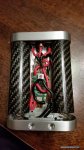
20141202_232306_resized.jpg
is it as simple as a bad solder joint, or something else. Any way to test the wiring to see if connections are being made from both sides of the wiring? Could it be mismatched batteries? I ordered four brand new Samsung 25R's for this project and thats what I have been using,,,
 

MrScaryZ

VU Donator
Platinum Contributor
Member For 5 Years
I built a mod with a DNA 40 chip, which is one of the good ones so far,,, my problem is I built it to use two 18650 and every time I take the batterys out to swap them( no onboard charging), one of the batteries is ~4.1 volts and the other is ~3.6 volts. It's like it is only seeing or using one of the batteries and not both. A pic of the wiring:

View attachment 9764
is it as simple as a bad solder joint, or something else. Any way to test the wiring to see if connections are being made from both sides of the wiring? Could it be mismatched batteries? I ordered four brand new Samsung 25R's for this project and thats what I have been using,,,
By glancing it does look like they are paralell now I myself would not splice the wires together then put them to the board but it shoud work...
Do you have a good ground?

I have not seen the spec sheet on the dna 40 but in theory it should not know that its parallel the only fear I have is they have an input amp limit and two batteries in Parallel doubles the amps
 

Texasdawg

Member For 4 Years
Member For 3 Years
Member For 2 Years
Member For 1 Year
Member For 5 Years
The batteries are wired in parallel, the spliced wires are the only way I figured to use two batteries with 18 gauge wire and still fit the holes on the board the wires get soldered to. Will check connections with a multimeter,,, I believe it has a voltage input limit, but not sure if it can check amperage input,,,
 
L

Lighty269

Guest
It is not the amps. Batteries in parallel will provide more amperage if needed, as the current is drawn from the unit.
 
Last edited by a moderator:

MrScaryZ

VU Donator
Platinum Contributor
Member For 5 Years
The batteries are wired in parallel, the spliced wires are the only way I figured to use two batteries with 18 gauge wire and still fit the holes on the board the wires get soldered to. Will check connections with a multimeter,,, I believe it has a voltage input limit, but not sure if it can check amperage input,,,
I will check and see if their is an actuall true specs on that board I fear the amp limit that would suck and just prove that Evolv is way behind I have no idea why as the first to go beyond 15 watts on a regulated board are so behind on everything and have come up with this questionable chip
 

MrScaryZ

VU Donator
Platinum Contributor
Member For 5 Years
It is not the amps. Batteries in parallel will provide more amperage if needed, as the current is drawn from the unit.
That is not always the case... some boards actualy do a check for input amperage and voltage and will deny higher amperage
 

MrScaryZ

VU Donator
Platinum Contributor
Member For 5 Years
Here are the specs may or may not be the issue that is the question

Evolv DNA 40
40 Watt Variable Power Module with Temperature Protection
The DNA 40 is a power regulated digital switch-mode DC-DC converter for personal vaporizers. It
features Evolv’s patented Wattage Control, Temperature Protection, Preheat, Step Up/Step Down
Topology, Digital User Controls, OLED Screen, Onboard Buttons and Synchronous Rectification for
maximum battery life and minimal heat generation. It is the most advanced personal vaporizer
controller ever made.
Specifications
Output Power
Output Voltage
Output Current, continuous
Output Current, instantaneous peak
Atomizer Resistance, standard wire
Atomizer Resistance, temperature sensing wire, cold
Temperature Limit
Input Voltage
Input Current
Screen On Current
Quiescent Current
Power Down Current
Efficiency
Weight
Footprint
Thickness
Screen size
Minimum Typical
1 Watt
1 Volt
.16 Ohm .7 Ohm
.10 Ohm .4 Ohm
200°F 450°F
3.1 Volts 3.7 Volts
.5 Amps 8.0 Amps
25mA
1 mA
Max
40 Watts
9.0 Volts
16.0 Amps
23.0 Amps
2.0 Ohms
1.0 Ohm
600°F
4.3 Volts
16.0 Amps
5uA
92%
6g
.65” x 1.30”
.32”
.69” OLED
.80” x 1.30”


Here is the PDF link
http://www.google.com/url?sa=t&rct=...Gd3N7E5JDH6ryIdJQ&sig2=m2-4vneu_PH7ja0901hlrw
 
L

Lighty269

Guest
That is not always the case... some boards actualy do a check for input amperage and voltage and will deny higher amperage


Nothing personal, I stand by my original statement. If the board needs the current, it will use what is available. We are talking about current, not voltage. I believe the wiring needs to be checked for a bad connection. Possible a cold solder joint on the sled. Both batteries should draw the same voltage at the same time. The amperage in this case would only affect the unit if it could not provide enough current that is needed to power the unit depending on the build that is being used.
 

MrScaryZ

VU Donator
Platinum Contributor
Member For 5 Years
Nothing personal, I stand by my original statement. If the board needs the current, it will use what is available. We are talking about current, not voltage. I believe the wiring needs to be checked for a bad connection. Possible a cold solder joint on the sled. Both batteries should draw the same voltage at the same time. The amperage in this case would only affect the unit if it could not provide enough current that is needed to power the unit depending on the build that is being used.
Of course its not personal we are discussing ... I understand where you are coming from I hope its only a wiring issue as I stated to the OP I would have not done it that way... harder to debug and troubleshoot lets hope its just a bad solder joiint :)
 

Setanta

Member For 4 Years
Member For 3 Years
Member For 2 Years
Member For 1 Year
Member For 5 Years
Quick and easy way to check your battery connections...

First remove both batteries. Check the voltage from one of them with your DMM. (A fully charged LiPo cell should be around 4.2 volts).

Put this single battery into the mod and check the voltage between the positive and earth connections at your board. It should be the same as the voltage you measured off the single battery above (since the cells are wired in parallel using a single cell should work just fine).

Swap the same cell into the other slot in your mod and repeat the process. Again it should be the same voltage. If not then you have a bad connection somewhere between your batteries and your board. Check your joints for the slot which registers a lower voltage than it should - probably zero.

If both cases give you the same voltage which is the voltage of the cell you used for testing then the battery connections seem fine. In that case it could be a battery balance issue but that seems rather unlikely.

To check the battery balance possibility - mark one of the batteries - say the one which seems to stay fully charged. Charge them both up and use them and see if the same one stays fully charged. Then recharge them but this time put them in the opposite slots. Use them until they need charged again and check to see if it is the same battery which retains its charge. If it does, it's a battery problem. If it's the other battery then it's a wiring problem.

Setanta
 
Last edited:

Texasdawg

Member For 4 Years
Member For 3 Years
Member For 2 Years
Member For 1 Year
Member For 5 Years
Update: took the batteries out and checked wiring and connections. The bottom-neg connections are springs to provide force and cushion to drops and such. The top-pos connections are the bent metal pieces out of a battery sled. One of the top connections was out of alignment enough to not be making good contact. So I was just using one battery. Adjusted and rechecked and now seems fine. Have gone over 24 hrs now and weak battery note has not come up yet on the dna40 screen. I appreciate the helpful insites given,,,20141203_091606.jpg
 
L

Lighty269

Guest
Update: took the batteries out and checked wiring and connections. The bottom-neg connections are springs to provide force and cushion to drops and such. The top-pos connections are the bent metal pieces out of a battery sled. One of the top connections was out of alignment enough to not be making good contact. So I was just using one battery. Adjusted and rechecked and now seems fine. Have gone over 24 hrs now and weak battery note has not come up yet on the dna40 screen. I appreciate the helpful insites given,,,View attachment 9835


Nice! Good to hear you have it fixed...
 

Texasdawg

Member For 4 Years
Member For 3 Years
Member For 2 Years
Member For 1 Year
Member For 5 Years
'Nother update: I got about 20 hrs total vaping time at 430 degrees and 32watts on a DNA40 chip and two Samsung 25r's in temp-control mode. Overall approx two days worth of time. SO happy seeing as I was useing a battery sucking Cloupor T5. And my mod never shut off on me either,,,
 

VU Sponsors

Top