Here's the dropper, and here's the answer.
The solution is 50/50 VG/PG
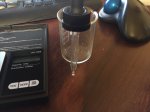
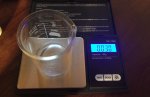
The solution is 50/50 VG/PG

Was that a big drop or a little drop?

I'm done for at least 4-5 months. I'll need some VG and wire by thenDepends on how much shit costs, I usually drop atleast 100 on vape shit every other week.
and maybe so flavors.
I get the same weight with drops. Skinny needle tip bottles I generally get 0.02. With that said,some flavorings are a bit heavier than others, too.
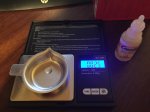
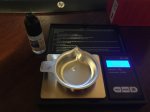

Going by Juice me up I'd say with some confidence that 1 drop = 1/20 ml.Thank you and....Cheers


Going by Juice me up I'd say with some confidence that 1 drop = 1/20 ml.Thank you and....Cheers

Am I not correct to say that depending on the formation of any fluid you are measuring and its density the weight will change?Here's the dropper, and here's the answer.
The solution is 50/50 VG/PG
View attachment 33974 View attachment 33975
Am I not correct to say that depending on the formation of any fluid you are measuring and its density the weight will change?
That is incorrect unless each substance be it a flavor PG or VG is consistent any combination of these will have a different weight density of a fluid is not constant it is a constant only if the chemical structure is the same.. The title of the thread says "Well yes. Not all fluids are the same. Not all fluids will cling to the dropper/dripper the same. And not all droppers are the same.
However, we do work with a basic list that remains consistent. Although temperature will have an effect also, I made no allowance for that.
That is incorrect unless each substance be it a flavor PG or VG is consistent any combination of these will have a different weight density of a fluid is not constant it is a constant only if the chemical structure is the same.. The title of the thread says "
How much does a drop really weigh" so for 50/50 PV/VG you have a weight but not every drop will be the same for a given flavor as each one contains different densities of fluid. The only way to define the weight is to build a spreadsheet for example with every single fluid you are measuring..
I w
So you are saying Science is wrong and that different fluids all weigh the same? Because thats what you are currently presenting. If you would like I will give you a HS science lessonI beg to differ. Fluid densities change with the temperature. Fluids expand, therefore you will get more drops per ml at higher temps than cold.
We'll need multiple spreadsheets if we're to do it properly. Or, we can simply work at a constant temperature and use one.
And now we understand the reason for controlled environment labs.
So you are saying Science is wrong and that different fluids all weigh the same? Because thats what you are currently presenting. If you would like I will give you a HS science lesson
The only way to define the weight is to build a spreadsheet for example with every single fluid you are measuring..
That may be the case @NGAHaze ze and that surely should have been part of the original post.. But misconstruing information purposely or not confuses.. Correcting thiswas only my goal before you start getting 100 posts with no significant value...While this is true, if you look at the specific gravity for each flavoring you will find that they are all pretty close; close enough for our purposes to just use 1 for all of them as long as we do so consistently and in all recipes.
However, there's another HS science lesson here too. Surface tension and resistance, not all fluids cling to a dropper equally.So you are saying Science is wrong and that different fluids all weigh the same? Because thats what you are currently presenting. If you would like I will give you a HS science lesson
That may be the case @NGAHaze ze and that surely should have been part of the original post.. But misconstruing information purposely or not confuses.. Correcting thiswas only my goal before you start getting 100 posts with no significant value...
Trying to justify you are wrong is not the way to fix this.. If you want to keep going I willDo you not think that a blanket statement of One milliliter equals 20-40 drops is a bit of misinformation also?
Trying to justify you are wrong is not the way to fix this.. If you want to keep going I will
I was replying to the title of the thread!Oh I insist that we do.
What I have done here, is answered 2 questions that keep getting repeated in this forum every week.
The answer to which have remained consistent. We use 32 or 33 drops per ml. Not 20. The numbers, all 3 of the ones I have shown here. Simply show that using 32/33 drops as advertised on many bottles of flavoring are close enough to use with some degree of certainty.
To be continued after my nap
I is old
I was replying to the title of the thread!
Its not about how much mercury weights its about the density of fluids!! Period! they do weigh different and it does matter you are dismissing it..I'll run out to the drug store and pick up some Mercury, and weigh it. Just in case someone wants to include that in their mix in the future.
Until then, it's nap time.
I haven't dismissed it at all.Its not about how much mercury weights its about the density of fluids!! Period! they do weigh different and it does matter you are dismissing it..
As if it is not important when its basic Science so the larger the batch made the larger the error..

I dont care about that I state simply the laws of science which you refuse to address so I have dismissed it as wellI haven't dismissed it at all.
But since you are so concerned about the errors that may come from my so called dismissive post.
Please post a picture of the calibration certification that came with ANYONES scale calibration weights within this forum. Especially those using the wonderful LB-501 scale.
My bet is you'll discover they went the cheap route, with dismissive errors in their calibration weights.
View attachment 34152
I dont care about that I state simply the laws of science which you refuse to address so I have dismissed it as well