
Become a Patron!
You are using an out of date browser. It may not display this or other websites correctly.
You should upgrade or use an alternative browser.
You should upgrade or use an alternative browser.
I need a good coil build
- Thread starter RayceCarr
- Start date

What exactly are tension coils?Keep it simple. Tension coils using Nichrome works best on mechs.

Easy stuff. It's using a coil jig tool. The wraps are wound and they touch each other with tension. When you try to pull them apart. They spring back. I love these, because I never get spit back. Lots of clouds and plenty of flavor. And I'm all about flavorWhat exactly are tension coils?

Is there anything extra I could do to them to make them even better like parallel them or make them into a sleeper coilEasy stuff. It's using a coil jig tool. The wraps are wound and they touch each other with tension. When you try to pull them apart. They spring back. I love these, because I never get spit back. Lots of clouds and plenty of flavor. And I'm all about flavor

What exactly are tension coils?
Sorry I missed this Rayce. I'll get back to you on any of your questions but tension coils are wound with strain (elongation) rather than forming (basically, the force of bending). All winds have strain. However, balancing strain can stabilize inconsistencies in wire and if used during the installation using tension to keep leads equally balanced can help avoid unbalanced output in the wind and hot leads.
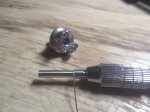
The method easy using a screwdriver, pin vise (as in pic above) or jig and adding tension until the turns are tight enough that they do not unwind. This point I call adhesion is simply as tight as nature allows the wire to come together. When wound this way oxidation is uniform and rapid. Resistance super stable and output uniform end-to-end. So done right, the fire that way and at a more stable red zone temperature rather than inside-out like conventional micro coils. You will experience roughly an increase of about 25% or more in vapor density (so the vape will seem cooler). And these last two things are the indicator of success. Color temperature and finally vape temperature. The cooling confirming you're achieving superior vaporization with the same input of power and air.
Kick in guys, let's help Rayce get over. Good luck and Happy Father's Day, as applies.


What exactly are tension coils?
Sorry I missed this Rayce. I'll get back to you on any of your questions but tension coils are wound with strain (elongation) rather than forming (basically, the force of bending or compression). All winds have strain. However, balancing strain can stabilize inconsistencies in wire and if used moderately in installation to balance leads can help ensure uniform output avoiding hot leads.
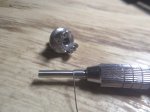
The method is easy using a screwdriver, pin vise (as in pic above) or jig and adding tension until the turns are tight enough that they do not unwind. This point I call adhesion is simply as tight as nature allows the wire to come together. When wound this way oxidation is uniform and rapid. Resistance super stable and output uniform end-to-end. So done right, the fire that way and at a more stable red zone temperature rather than inside-out like conventional micro coils. You will experience roughly an increase of about 25% or more in vapor density (so the vape will seem cooler). And these last two things are the indicator of success. Wire color temperature in dry un-wicked operation and finally output vape temperature. The cooling confirming you're achieving superior vaporization with the same input of power and air.
It does not take much tension. So take your time adding strain slowly until the wire gets "sticky". You'll see and feel it happen. It's just a bit beyond this that adhesion is achieved. Too much strain and the wind and even leads can go hot. So adhesion is a zone of tension. Some practice and you can dial up how hot you want the wind to go. Pulsing for oxidation after installation is what ultimately stabilizes the wind and for low output (<25W) takes just a few pulses. More oxidation may be required for fatter wire and higher power loads.
Kick in guys, let's help Rayce get over. Good luck and Happy Father's Day, as applies.
Last edited: