
Become a Patron!
You are using an out of date browser. It may not display this or other websites correctly.
You should upgrade or use an alternative browser.
You should upgrade or use an alternative browser.
Rebuildables with TC
- Thread starter JCub
- Start date

Faceless Vapes
Silver Contributor
Member For 4 Years
Member For 3 Years
Member For 2 Years
Member For 1 Year
Hello guys.. i 'm pretty new to vaping but i m really into rebuilding.. the question is if i can use temp control on Rebuildables... i wanna buy eleaf's istick 60w tc.. and i already have lemo... can i use it with temp mode?
You can use it in TC mode, however you will have to use Ni200 wire in order to run it in TC.


Well no. Kanthal is not capable of TC, but there are other better options besides nickel. Nickel sucks & is the worst choice for TC IMO
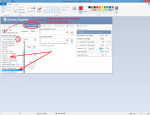
The closest thing to Kanthal for TC is NiFe 52 it stands for Nickel Iron & it can be built just like Kanthal albeit much lower resistance. It is 3.5 times lower resistance then Kanthal, but it's 4.5 times more then Nickel. It is available in the US from http://www.cottonman.com/reactorwire.html or from Germany from http://www.zivipf.com/en_GB Note: Reactor Wire is NiFe 52, but it's a higher resistance version then the one from Germany called NiFe 48 Titanium is another option, but do not torch it or dry burn it the way you would with Kanthal. I recommend using Steam Engine http://www.steam-engine.org/coil.asp?mat=reactor and select One of these options from the drop down menu in the coil building tab. that way you can see what the best ga wire is for you & how many wraps it will require etc.
Also I think the I stick 60 TC has a Titanium setting (I stick 40 does not have Tit setting) so if you make Ti coils the temp will read right & if you get the NiFe 52 then use it in Titanium mode, but you have to add an offset because the TCR is higher on the NiFe (TCR .00405°C) then the Tit. (TCR .0035°C). Just add 20 - 30 degrees to what you want ex. if you want 450 then set to 475 in Titanium mode using NiFe 52
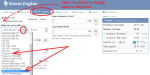
The closest thing to Kanthal for TC is NiFe 52 it stands for Nickel Iron & it can be built just like Kanthal albeit much lower resistance. It is 3.5 times lower resistance then Kanthal, but it's 4.5 times more then Nickel. It is available in the US from http://www.cottonman.com/reactorwire.html or from Germany from http://www.zivipf.com/en_GB Note: Reactor Wire is NiFe 52, but it's a higher resistance version then the one from Germany called NiFe 48 Titanium is another option, but do not torch it or dry burn it the way you would with Kanthal. I recommend using Steam Engine http://www.steam-engine.org/coil.asp?mat=reactor and select One of these options from the drop down menu in the coil building tab. that way you can see what the best ga wire is for you & how many wraps it will require etc.
Also I think the I stick 60 TC has a Titanium setting (I stick 40 does not have Tit setting) so if you make Ti coils the temp will read right & if you get the NiFe 52 then use it in Titanium mode, but you have to add an offset because the TCR is higher on the NiFe (TCR .00405°C) then the Tit. (TCR .0035°C). Just add 20 - 30 degrees to what you want ex. if you want 450 then set to 475 in Titanium mode using NiFe 52
Attachments

For starters I think SS has to low a TCR to work reliably in many TC mods .0008 - .0013. The bottom TCR limit .001 had to be lowered in the DNA-200 to enable it's use & that is one of the most capable devices. Another issue is that there is so many grades of SS how do you really know what you've bought? You can use some factory tanks like the Uwell Crown with 316L SS coil heads, but that raises another question. Why do people think SS is safer then any of the other alloys?? There is a perception that SS is used for surgical implant etc. So it must be safe right! Well ignorance is bliss for some I guess. For me I know there are over 200 grades of SS with many different compositions and processes such as annealing, heat treating, & cleaning. Just using the Crown coils as an example here is the composition of 316 SS
COMPOSITION
Type 316 Type 316L
% %
Carbon 0.08 max. 0.03 max.
Manganese 2.00 max. 2.00 max.
Phosphorus 0.045 max. 0.045 max.
Sulfur 0.030 max. 0.03 max.
Silicon 0.75 max. 0.75 max.
Chromium 16.00 - 18.00 16.00 - 18.00
Nickel 10.00 - 14.00 10.00 - 14.00
Molybdenum 2.00 - 3.00 2.00 - 3.00
Nitrogen 0.10 max. 0.10 max
Iron Balance Balance
We've already got many of these elements in Kanthal, Nichrome, & Ni 200.
So 316 SS takes the elements we're already vaping and adds Manganese & Molybdenum??? I have seen no one attest to the safety of Manganese or Moly & the only thing that would effectively seal these elements from the e-juice would be an oxide layer.
Kanthal was specifically designed to form an oxide layer, So was Nichrome albeit inferior to Kanthal. As for SS well don't know???
The quote below is from the Kanthal manual and Nicrothal is kanthal brand Nichrome
"The protective oxide layer on Kanthal® alloys formed at temperatures above 1000°C (1830°F)
consists mainly of alumina (Al2O3). The color is light grey, while at lower temperatures (under
1000°C (1830°F)) the oxide color becomes darker. The alumina layer has excellent electrical insulating properties and good chemical resistance to most compounds.
The oxide formed on Nikrothal® alloys consists mainly of chromium oxide (Cr2O3). The color is
dark and the electrical insulating properties inferior to those of alumina.
The oxide layer on Nikrothal alloys spalls and evaporates more easily than the tighter oxide layer
that is formed on Kanthal alloys."
COMPOSITION
Type 316 Type 316L
% %
Carbon 0.08 max. 0.03 max.
Manganese 2.00 max. 2.00 max.
Phosphorus 0.045 max. 0.045 max.
Sulfur 0.030 max. 0.03 max.
Silicon 0.75 max. 0.75 max.
Chromium 16.00 - 18.00 16.00 - 18.00
Nickel 10.00 - 14.00 10.00 - 14.00
Molybdenum 2.00 - 3.00 2.00 - 3.00
Nitrogen 0.10 max. 0.10 max
Iron Balance Balance
We've already got many of these elements in Kanthal, Nichrome, & Ni 200.
So 316 SS takes the elements we're already vaping and adds Manganese & Molybdenum??? I have seen no one attest to the safety of Manganese or Moly & the only thing that would effectively seal these elements from the e-juice would be an oxide layer.
Kanthal was specifically designed to form an oxide layer, So was Nichrome albeit inferior to Kanthal. As for SS well don't know???
The quote below is from the Kanthal manual and Nicrothal is kanthal brand Nichrome
"The protective oxide layer on Kanthal® alloys formed at temperatures above 1000°C (1830°F)
consists mainly of alumina (Al2O3). The color is light grey, while at lower temperatures (under
1000°C (1830°F)) the oxide color becomes darker. The alumina layer has excellent electrical insulating properties and good chemical resistance to most compounds.
The oxide formed on Nikrothal® alloys consists mainly of chromium oxide (Cr2O3). The color is
dark and the electrical insulating properties inferior to those of alumina.
The oxide layer on Nikrothal alloys spalls and evaporates more easily than the tighter oxide layer
that is formed on Kanthal alloys."