The USB chips used in the mods needs to be determined. If you look at the metamorphosis of the USB spec, you will see that is is possible to get higher current and in some cases w/ usb 3.1, up to 100w (20v @5a).
Back in the old days, power was only on two pins on the charging cable. Then the port got 'smart'. w/ USB 2, if voltage instead of data was detected on the other pins, the device's chip switched to high curent/charge mode, to accept the max current the charger was designed to deliver to it. Some of the cell phones would trickle charge or not charge at all if there was no voltage on the other pins. Some of you may have noticed this when using old chargers on newer cell phones.
There are docs on wikipedia to get you started with links to further explain the 'open' spec and the chips used.
I'm working on a couple PoE security cams w/ raspi's and 2 cams each. Waiting on the buck converter in this pic to power stuff at end of ethernet cable because it is tiny.
So, just throwing out something below for resourceful peeps - so don't bother me for details, since I do not want to be responsible for mistakes.
Using a few cheap components and if you can solder, you can build a charger using these parts. It wont have a display, but have led's to indicate charging and end-of-charge. There are other variations of these boards on FT for building those portable power packs. With a little imagination, you can see how you can build a small charger and/or power pack for dual use if so inclined.
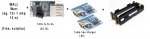
If you get the small boards they fit at the end of the sled. You can also remove the usb female since it is best to hardwire the thing - they have solder tabs input and output.
I still have a couple ego twists I use as loaners or travel mods. Small and handy w/ aro-ii's. Their chargers went tits-up a while ago, and have been using a similar lipo charging board as a replacement. I just solder a reclaimed carto 510 to board and clear shrink wrap the thing so i can still see the led's.



