Become a Patron!

Garden time is coming

gopher_byrd

Cranky Old Fart
VU Donator
Diamond Contributor
ECF Refugee
Member For 5 Years
VU Patreon
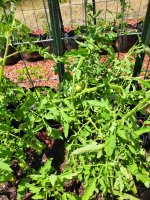
I have a garden now. 8 actually. 3 vegetable, 5 flower gardens. And a greenhouse. Planted pumpkins, potatoes, carrots, peas, corn, sunflowers (if they count), leeks, onions, rhubarb, parsley, sage and tomatoes. And there are a ton of existing raspberry bushes.

No idea what I'm doing. Went full on Paul Bunyan on some of the trees. Thought I'd visit here, and find out how bad I've screwed up. lol
Sunflowers count as they are good pollinator flowers. If everything is growing you're doing good.
 

Jimi

Diamond Contributor
Member For 5 Years
May be an image of text that says 'SHOULD I COMPOST THIS? YES! NO! FRUITS & VEGETABLES EGGSHELLS & NUT SHELLS DAIRY PRODUCTS CHARCOAL & ASH & EGGS COFFEE GROUNDS & FILTERS CARDBOARD & NEWSPAPER FATS,OILS, FATS, OILS, GREASE YARD TRIMMINGS & LEAVES MEAT & FISH BONES, SCRAPS TINIGARDENHABIT.COM PET WASTES SAWDUST & WOOD CHIPS DISEASED OR INSECT-RIDDEN INSECT RIDDEN PLANTS COTTON & WOOL RAGS CITRUS PEELS & ONIONS DRYER & VACUUM LINT, HAIR PESTICIDE-TREATED TREATED PESTICIDE TRIMMINGS'
 

Jimi

Diamond Contributor
Member For 5 Years
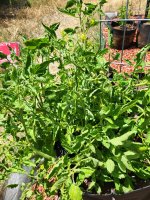
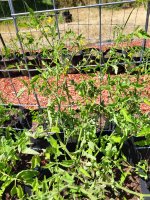
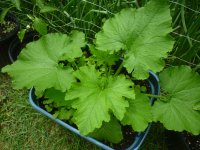
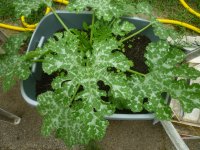
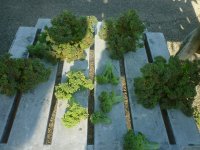
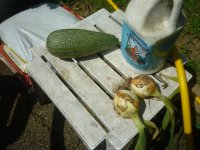
And here's my first zuc's plannin on puttin more in when something comes out.
P1510501.JPG

The top zuc is a black beauty the bottom one is called a Greyzinni
My first time growin (grey) in a container but grown in the garden (I usually grow 3 in garden) they put out more zuc's than I can give away.

P1510515.JPG
 

Jimi

Diamond Contributor
Member For 5 Years
Hey Jimi,

What if you could grow 3,000 pounds of clean, organic produce every year

From a small space?

  • No industrial farming.
  • No supply chain.
  • No wondering what's been sprayed on your food.

Just real, nutrient-dense food that you grew yourself.

So many people hold back from starting because they feel like they need a sprawling,
multi-acre farm just to make a meaningful difference for their family.

But that is a complete myth.

That's exactly what Brianne Bernsen has built at her family micro-farm in Texas.

And on June 13, she's one of several speakers sharing exactly how they're doing it,

At the complimentary Exit and Build Virtual Summit.

You'll also hear from the founder of Sovereignty Ranch, a 200-acre regenerative farm that's completely outside the industrial food system,

And other leaders who are building real food security from the ground up.

If clean, self-sufficient food has been something you've been thinking about…

This is worth five hours of your time.

Discover how to secure your own pure, chemical-free food supply right at the back of your yard

With love and care,​
 

Jimi

Diamond Contributor
Member For 5 Years
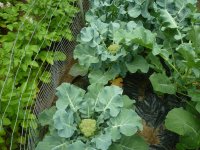
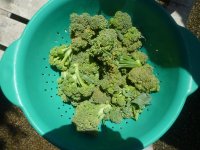
Here's my First pick of the day.....June 15
I did pick a couple hot peppers yesterday but they disappeared fast :rolleyes:
Not a big pick but I was hungry

P1510533.JPG

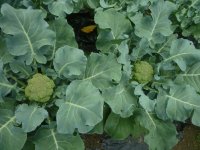
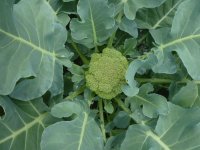
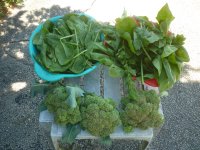
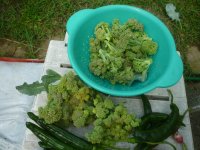
Picked 3 heads of broccoli,
And 2 bowls of Giant Noble Spinach
The broccoli woulda gotten bigger but I was out and I trust mine far more than store bought organic broccoli;)
And I haven't had cooked spinach since last years garden spinach
spinach is such a treat when cooked up right
 

Jimi

Diamond Contributor
Member For 5 Years
If you grow herbs, you've probably wondered…

Why do some herbal remedies seem to work amazingly well for one person but not another?

Or why one herb can support so many different health concerns?

The answer has a lot to do with understanding the person—not just the plant.

That's why we wanted to share a free mini-course from our friends Sajah and Whitney Popham, founders of the School of Evolutionary Herbalism. If you joined us for the Superfood Garden Summit, you may remember Sajah's presentation on creating a complete herbal medicine garden with just 10 plants.

He's back with a free mini-course that goes even deeper into the principles behind effective herbalism.

Their complimentary Vitalist Herbalism Mini-Course explores a fascinating approach to herbal medicine that looks beyond symptoms and helps you understand how herbs support the whole person.

>> Get Complimentary Access to the Vitalist Herbalism Mini-Course


Man sitting next to an array of vegetables and fruits that had been discarded

Whether you're growing herbs for teas, tinctures, family wellness, or simply want a deeper understanding of the plants in your garden, we think you'll find it valuable.

One thing we especially appreciated is how they help connect traditional herbal wisdom with practical ways of understanding why certain herbs are chosen and how they work.

The course is only available for a few days, so if you're curious, be sure to check it out while it's available.

To growing and learning,

🌱 The Grow Your Own Vegetables Team 🌱


P.S. If you're already growing herbs like lemon balm, chamomile, calendula, peppermint, tulsi, or echinacea, this course may give you a whole new appreciation for the plants in your garden.

>> Get Access Today
 

Jimi

Diamond Contributor
Member For 5 Years
Sooner or later, almost every gardener encounters aphids.

They're one of the most common garden pests—and some varieties, like cabbage aphids, can multiply so quickly that a few insects can become a serious infestation before you know it.

The good news? Aphids are much easier to manage when you know what to look for and take action early.

That's why we've created a complimentary Aphid Management Guide to help you prevent problems, protect your plants, and keep your garden thriving.


>> Download Your Complimentary Aphid Management Guide Today 🪲


Types of Seeds

Inside you'll discover:

♼ The aphid life cycle (and why timing matters)
👀 Natural prevention strategies
✂️ Mechanical and biological control methods
💦 Organic sprays and dusts (as a last resort)
A few simple techniques can go a long way toward keeping aphid populations under control and protecting your harvest.

>> Get Your Aphid Management Guide Today
To your harvest,

🌱 The Grow Your Own Vegetables Team 🌱
 

Jimi

Diamond Contributor
Member For 5 Years

🥬 Are You Giving Your Cabbage Too Much Space?

https://stratus.campaign-image.com/images/1513905000080927169_zc_v1_1781202103752_video.jpg


Most gardening books recommend spacing cabbage plants 18–24 inches apart. Stacey has been successfully growing productive cabbage heads much closer together for years.

In this video, she shares how close-spacing works, when to use it, and how it can help you harvest more food from the same garden space.

🐛 What's Eating Your Plants?


You head out to the garden and discover holes in your leaves—or worse, entire plants that seem to have disappeared overnight.

Before reaching for a solution, it's important to identify the culprit. Different pests leave different clues, and knowing what to look for can save you time, frustration, and harvests.

In this week's article, you'll learn how to recognize common pest damage, distinguish insect problems from animal damage, and use a simple overnight test to narrow down the cause.
https://stratus.campaign-image.com/images/1513905000080927169_zc_v1_1781202251671_garden_diversity(1).png
 

Jimi

Diamond Contributor
Member For 5 Years

🌿 Herbal Wisdom: Creating More Effective Herbal Remedies

Many gardeners love growing medicinal herbs, but creating effective herbal remedies takes more than simply mixing a few herbs together and hoping for the best.

Our friend Sajah Popham recently released a free lesson on Strategic Formulation—the art of designing herbal formulas with greater purpose and precision.

In this free training, you'll learn:

🌿 The 5 components of a well-designed herbal formula
🌿 How to choose herbs that work together effectively
🌿 A simple framework for creating your own custom remedies

If you grow herbs in your garden, this is a fascinating way to deepen your understanding of how to use them.
 

Jimi

Diamond Contributor
Member For 5 Years
If there’s anyone out there who knows about water harvesting, it’s Brad Lancaster, author of the award-winning Rainwater Harvesting for Drylands and Beyond.

If you’re been water harvesting or growing your own food for any length of time, it’s likely you’ve heard of him.

So for this issue of the Urban Grower’s Guide, it’s only natural that I include his water harvesting wisdom.

Brad Lancaster Articles:

  • 8 Principles for Successful Rainwater Harvesting: Part 1
  • 8 Principles for Successful Rainwater Harvesting: Part 2
If this has piqued your interest, take your yard or homestead to the next level in self-sufficiency with our online Signature Course Water Harvesting in Depth. For the next month we have discounted it to only $67.

Through six prerecorded modules you can take at your own pace, Don Titmus and I will share the importance of water harvesting combined with aspects of permaculture, various harvesting methods, real examples of harvesting systems, and the basics of earthworks design.

We will help you identify exactly what needs to be done in your yard to be on your way to water self-sufficiency. Click here to learn more and enroll.

As always, please send me an email if you have any questions!
 

Jimi

Diamond Contributor
Member For 5 Years
Did you know that apples are about 25 percent air? That’s why apples float in a bucket of water and why a fresh apple feels lighter than it looks. The air sits in tiny pockets between the cells of the flesh, which is part of what gives a crisp apple that satisfying crunch when you bite into it. But the longer an apple sits in storage, the more it loses those air pockets, and that’s why a mealy, dense apple means it’s been sitting too long.

The thing is, most apples sold in American grocery stores have been sitting in cold storage for six to twelve months before they even get to the produce aisle. Growers pump nitrogen into sealed rooms and lower the oxygen to basically put the apples to sleep. That apple in your fridge may have been picked late last summer or fall, and it has been sitting in a chilled, oxygen-starved warehouse ever since. It is still safe to eat, but the Vitamin C drops drastically, and the antioxidant polyphenols like quercetin degrade too.

A freshly picked apple from a local orchard in the fall is a completely different food from a year old June apple at the supermarket.

Speaking of apples…

Did you know there is one specific kind of apple that helps shrink your waistline faster than other apples? Go to our blog to find out more:

>> This apple is the powerhouse of weight loss

P.S. What’s your favorite kind of apple? Has it changed since you were a kid? Hit reply and let me know because I’m curious if we all like the same kind of apple best.
 

Jimi

Diamond Contributor
Member For 5 Years
Yesterday was the summer solstice, the longest day of the year (for us in the North). And it’s a perfect week for us to launch our long-awaited film Farmacy of Light, narrated and executive produced by Evangeline Lilly (Lost, The Hobbit, Avengers). We’re excited that the news broke this week: read about it HERE.​
Our brand new film launches TOMORROW - so keep an eye on your inbox for a link to watch. I can confidently say, there has never been a film like this. You’re going to love it.​
Divider

MONDAY MOTIVATION​

June 22nd, 2026

A woman mowing a lawn in Sweden
🌱 REGENERATIVE FUTURE: One of the simplest things you can do for your local ecosystem this summer: let a section of your yard go unmowed. Even a small patch of longer grass becomes habitat for pollinators, ground beetles, fireflies, and birds. It costs nothing and requires less effort than what you're already doing. Learn about biodiversity and native plants for your home HERE.
🧠 OPTIMIZED MIND: Research shows high indoor temperatures can dull your cognition, measurably reduce working memory, reaction time, and decision-making, even when you don't feel obviously uncomfortable. Staying well-hydrated and keeping your sleep environment cool are two of the most effective counters. Here are some other tips on sleep hygiene.
🏡 HEALTHY HOME: It’s always a good time to reassess what's in your sunscreen. Most conventional formulas contain oxybenzone and octinoxate — chemicals that have been flagged for hormone disruption and are now banned in Hawaii and several other places due to coral reef damage. There are great mineral alternatives that work just as well. EWG's annual sunscreen guide makes it easy to find one that's safe for you and the water.
Divider
 

Jimi

Diamond Contributor
Member For 5 Years
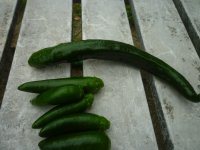
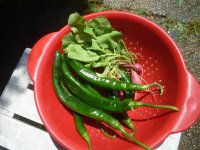
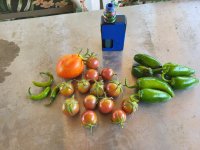
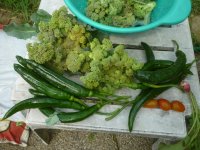
Ok not much to see today but I did pick some hot peppers
The long one was Supposed to be a hot banana pepper, I have grown these for years and never had one like this, too long, too thin to be hot banana, at least the hot banana I planted
It looks like a large jalapeno there's some regular jalapenos there tooP1510593.JPG
 
Last edited:

Bliss Doubt

Diamond Contributor
Member For 5 Years
Ok not much to see today but I did pick some hot peppers
The long one was Supposed to be a hot banana pepper, I have grown these for years and never had one like this, too long, too thin to be hot banana, at least the hot banana I planted
It looks like a large jalapeno there's some regular jalapenos there too

Did you mean to post a pic there?
 

Jimi

Diamond Contributor
Member For 5 Years

🎥 Harvest at the Right Time for Bigger Harvest

Did you know that when you harvest can be just as important as how you grow?​
Harvest Your Own Veggies
In this new video, discover simple harvesting tips that can make a big difference … from knowing when vegetables are at their peak flavor to harvesting in ways that encourage your plants to keep producing. Learn why harvesting a little earlier (instead of waiting for "perfect") often leads to better texture, sweeter vegetables, and even larger overall harvests.
Whether you're picking your first handful of lettuce or bringing in baskets of tomatoes, these practical tips will help you get the most from your garden.

🐌 Why Your Slug Problem May Be Bigger Than You Think

Have you ever gone to bed with a healthy-looking garden only to wake up and find leaves full of holes?

Most gardeners focus on removing the slugs they can see, but that's only a small part of the story. In our newest blog, we explore why most slug control methods fail and explain the hidden lifecycle that's often overlooked. Understanding what's happening beneath the surface can help you stop future damage instead of simply reacting to it.

If slugs are becoming a challenge in your garden, this is a great place to start.
Slug in garden
 

VU Sponsors

Top