Become a Patron!

Jimi's Daily Health Articles

Jimi

Diamond Contributor
Member For 5 Years
1 of 2 parts

Dear Self-Health Advocate,


This week: your morning coffee may be doing more for your prostate than you think—but how your body processes caffeine determines whether that cup is working for you or against you.


Then we break down three terms you've likely heard but may be confusing: lifespan, healthspan, and peakspan—and why that confusion is quietly costing men their best years. Finally, one of the most common questions I hear from men facing a prostate cancer diagnosis: how do I choose a treatment, and who do I trust to deliver it?


Three Rx. Clear answers. Let's go.


Rx1 | Coffee and Prostate Cancer


CONTEXT: Coffee is one of the most studied beverages in all of oncology. Over 1 million men. Sixteen prospective studies across three continents. The question researchers kept asking: does drinking coffee change your prostate cancer risk? The answer is more useful—and more nuanced—than a simple yes or no.


THE CHALLENGE: Prostate cancer kills nearly 35,000 American men every year. Most prevention conversations focus on diet, exercise, and supplements. Coffee rarely comes up. But it probably should.


THE SOLUTION: If you tolerate it well, drink 3–5 cups of black or lightly sweetened coffee per day. Prioritize morning consumption. Know your caffeine metabolism type before scaling up, especially if you have cardiovascular risk factors or sleep issues.


HOW IT WORKS

Coffee is not one compound—it is a complex mix of polyphenols, antioxidants, diterpenes, and caffeine, each with distinct biological effects. In prostate cancer specifically, the 2021 Chen et al. meta-analysis pooled data from over 1 million men and found that the highest coffee consumers had a 7% lower risk of localized prostate cancer, a 12% lower risk of advanced disease, and a 16% lower risk of fatal disease compared to the lowest consumers.


Those are not trivial numbers.


The mechanisms are plausible. Coffee improves glucose metabolism and insulin sensitivity—relevant because hyperinsulinemia drives prostate cell proliferation. It reduces systemic inflammation by lowering CRP and TNF-alpha. It modulates sex hormone levels, which influence prostate tissue behavior.


And beyond the prostate, a 2025 review of 3.8 million people found that drinking 3–5 cups per day was associated with a 15% lower risk of all-cause mortality and a 15% lower risk of cardiovascular disease.


Here is the clinical catch: over 90% of caffeine is cleared by a liver enzyme called CYP1A2. Your genetics determine whether you are a fast or slow metabolizer. Slow metabolizers (AC/CC genotype) clear caffeine in 7–12+ hours. They have a 36% higher odds of hypertension at more than 3 cups per day and up to 2x higher heart attack risk above 2 cups per day. Fast metabolizers (AA genotype) typically clear caffeine in 4–6 hours and tolerate 300–400 mg per day without significant cardiovascular risk.


If you do not know your genotype, treat the 2-cup mark as your safe ceiling until you do—especially if you have known cardiovascular risk or are prone to anxiety and disrupted sleep.


Dr. Geo's Clinical Take:
Coffee is not a prescription. But for most men, 2–4 cups of clean, black coffee each morning is a reasonable habit with real protective signal. If you feel wired, anxious, or find yourself staring at the ceiling at 2 AM, you are likely a slow metabolizer.

Cut back, shift timing earlier, or consider decaf—the polyphenol benefits are largely preserved without caffeine. And always think about what you are adding to the cup. A tablespoon of flavored creamer and three pumps of syrup erases most of the benefit.


THE EVIDENCE

Chen X, Zhao Y, Tao Z. et al. (2021). Coffee consumption and risk of prostate cancer: a systematic review and meta-analysis. BMJ Open. 11:e038902. doi:10.1136/bmjopen-2020-038902.

Emadi RC, Kamangar F. (2025). Coffee's Impact on Health and Well-Being. Nutrients. 17(15):2558. doi:10.3390/nu17152558.

Cornelis MC, El-Sohemy A, et al. (2006). Coffee, CYP1A2 genotype, and risk of myocardial infarction. JAMA. 295(10):1135–1141.

Palatini P, Ceolotto G, et al. (2009). CYP1A2 genotype modifies the association between coffee intake and risk of hypertension. J Hypertens. 27(8):1594–1601.


Rx2 | Lifespan vs. Healthspan vs. Peakspan


CONTEXT: Every man I know wants to live a long life. Fewer think carefully about what kind of life that will be. And almost none have heard the word peakspan—which is arguably the number that matters most if you want to stay strong, sharp, and capable into your 60s, 70s, and beyond.


THE CHALLENGE: The global average lifespan is 73 years. The global average healthspan—years lived in good health, free from major chronic disease or disability—is 64. That is a 9-year gap. Nine years of chronic illness, dependence, and diminished function. And peakspan? It starts declining even sooner.


THE SOLUTION: Stop optimizing only for more years. Build a strategy around all three: live longer (lifespan), live well (healthspan), and stay at your best as long as possible (peakspan). They require different inputs, and most men over-invest in lifespan while ignoring the other two.


HOW IT WORKS


Think of these three as a cascade. Peakspan goes first.


Peakspan—a concept formally proposed in 2026 by Zhavoronkov et al.—is the window during which you maintain at least 90% of your personal peak function.


VO2 max—your body's maximum capacity to use oxygen during exercise, and the single best predictor of cardiovascular fitness—peaks in your mid-20s and declines 10% per decade.


Total testosterone drops 0.8–1% per year, meaning a 60-year-old man typically has 20–30% less than he did at 40.


Immune capacity collapses: naïve T-cell export falls to just 5% of pre-puberty levels by age 55. This is not a future threat. For most men reading this, peakspan erosion is already underway.


Healthspan declines next. This is when chronic disease, mobility loss, and cognitive decline begin compressing daily life. The biological drivers are well-established: mitochondrial dysfunction, cellular senescence, NF-kB-driven inflammation, and epigenetic drift. These are not abstract—they are measurable, and they are modifiable.


Lifespan ends last. But here is the key insight from geroscience: faster biological aging shortens healthspan more than it shortens lifespan. You can live to 80 while spending 15 of those years in decline. The goal is compression of morbidity—squeezing the sick years into a shorter window at the very end of life.


The most powerful levers, supported by the literature: aerobic training to protect VO2 max and slow cardiorespiratory decline, limiting heavy alcohol use (3+ drinks per day consistently accelerates telomere attrition), and aggressive management of cardiometabolic risk factors like blood pressure, blood sugar, and inflammation.


Dr. Geo's Clinical Take
Be intentional about what you want and know the difference between the three. Then work toward it the way an athlete works on their sport—because if you have a body, you are an athlete, and living life fully is your sport.

Most men I see in the clinic are surprised when I tell them their peakspan is already declining in their 40s. That is not a reason to panic. It is a reason to act now.

The men who stay strongest the longest all share one quality: they train their body and mind with intention, year after year, without waiting for a diagnosis to motivate them. Do not let a PSA result or a diagnosis be your wake-up call. Let your peakspan be it.


THE EVIDENCE

Zhavoronkov A, Ying K, Wilczok D. (2026). Peakspan: Defining, Quantifying and Extending the Boundaries of Peak Productive Lifespan. Aging and Disease. doi:10.14336/AD.2026.0080. PMID: 41747171.

Garmany A, Yamada S, Terzic A. (2021). Longevity leap: Mind the healthspan gap. NPJ Regenerative Medicine. 6:57.

Garmany A, et al. (2025). Healthspan-lifespan gap differs in magnitude and disease contribution across regions. Communications Medicine.

Seals DR, Justice JN, LaRocca TJ. (2016). Physiological geroscience: Targeting function to increase healthspan and achieve optimal longevity. Journal of Physiology. 594(8):2001–2024.

Nakao T, et al. (2026). Genomic, phenomic and geographic associations of leukocyte telomere length in the United States. Nature Genetics.

Crimmins EM. (2015). Lifespan and healthspan: Past, present, and promise. The Gerontologist. 55(6):901–911.
 

Jimi

Diamond Contributor
Member For 5 Years
Part 2

Rx3 | How to Choose Your Prostate Cancer Treatment


CONTEXT: A prostate cancer diagnosis almost always comes with a menu of options: active surveillance, surgery, radiation, focal therapy, hormone therapy, or some combination. This is actually good news. It means you have time and choices. But more choices without a clear decision framework create anxiety, regret, and often, the wrong outcome.


THE CHALLENGE: Most men make one of the biggest medical decisions of their lives within weeks of a diagnosis—overwhelmed, under-informed, and relying on only one specialist. The specialist they see first often shapes the treatment they receive.


THE SOLUTION: Get at least three specialist opinions—one from each relevant treatment category—before you decide. Write out the pros and cons. Then step away from the screen and let your priorities, not just the data, guide the final decision. And choose your team as carefully as you choose your treatment.


HOW IT WORKS

No two prostate cancer cases are identical. Treatment decisions depend on your Gleason grade group, PSA level and trajectory, clinical stage, age, comorbidities, life expectancy, and—critically—what you value most. Sexual function. Urinary control. Convenience. Recovery time. These are not soft factors. They are medically relevant because the treatment you can live with is often the one that produces the best long-term outcome.


Here is the structural problem: a urologist will often recommend surgery. A radiation oncologist will often recommend radiation. That is not just bias—it is expertise. But it means the first office you walk into can disproportionately shape your decision.


The solution is to deliberately seek out multiple perspectives. At minimum, meet with a urologist, a radiation oncologist, and a functional or integrative medicine clinician who understands the whole picture. Two opinions per treatment type gives you a more complete map.


Write it down. Literally list the pros and cons of each option on paper. This forces you to confront trade-offs that are easy to gloss over in a rushed consultation. Then limit your independent online research after choosing your team.


More Googling at that point does not produce better decisions—it produces more anxiety and contradictory information.


Finally, do not underestimate the value of stepping away. A walk in nature, a quiet hour without your phone, even a workout—these are not escapes from the decision. They are part of making it well.


The nervous system processes complex decisions better when it is not in a state of chronic stress. Many of my patients have told me their clearest thinking happened not in the exam room, but on a hike.


Dr. Geo's Clinical Take
I have worked with thousands of men as they navigate this decision. The ones who do best are not necessarily the ones who chose surgery over radiation, or active surveillance over treatment.

They are the ones who chose intentionally—with full information, with clarity about their own values, and with a practitioner who saw the whole man, not just the tumor.

Who you get treated by matters as much as what treatment you choose. Look for a clinician who listens, explains trade-offs honestly, and respects your priorities.

Avoid anyone who dismisses your questions or rushes you toward a single answer.

You have time to do this right. Use it.


DECISION FRAMEWORK

  • Clarify your priorities. Sexual function, urinary continence, recovery time, treatment schedule—rank them before the first consultation.
  • See at least three specialists. One per major treatment category. Two opinions per category if possible.
  • Write down the trade-offs. Pros and cons of each option on paper. Not a mental list. Paper.
  • Limit post-decision Googling. Once your team is chosen, restrict independent research. It rarely adds clarity and often adds noise.
  • Get quiet. Time in nature, movement, and stillness are legitimate parts of good decision-making—not luxuries.
  • Blend logic and intuition. The data narrows the field. Your values pick the option. Both are valid.

Until next week,
 

Jimi

Diamond Contributor
Member For 5 Years
mail
Hi

If you're like most people, you probably use aluminum foil regularly in your kitchen, and probably have never questioned whether it can cause possible harm to your health... well, today's article from my friends at TheAlternativeDaily shows you at least 3 reasons why aluminum foil should be avoided and how it can harm your health...

3 dangers to your health of using Aluminum foil (please share this important article with friends too by fwding them this email)

Have you misplaced your phone, keys, or wallet more than once in the last 30 days?

Wondering if your brain is “over the hill” due to your age?

A stunning new exposé reveals that AGE has less to do with memory decline than previously thought.

I was shocked to learn this myself.

It turns out… Stanford University neuroscientists identified a nasty “cell invader.” It attacks cells in the memory center of your brain - the hippocampus - causing your brain to shrink.

A Nobel-prize-winning scientist named Dr. Rita Levi-Montalcini discovered this 38 years ago.

But until this recent exposé revealed Big Pharma had been hiding it for decades - few knew.

At 103 years old — Dr. Rita strode up to address a crowd of onlookers:

“I’m sharper now - at 103 - than when I was 20.”

It’s all thanks to understanding why memory decline actually happens.

>> Try this 8-second ear trick for better memory (backed by 5 scientific studies).

Enjoy,
 

Jimi

Diamond Contributor
Member For 5 Years
Episode 469: ACIP UPHEAVAL, AI DISRUPTION, AND MASTERING YOUR MIND
Today on The HighWire!

Major questions surrounding climate lockdowns, the explosive growth of artificial intelligence, and exploring the cause of COVID vaccine injuries.

But first, HHS Secretary Robert F. Kennedy Jr. announces the launch of a new platform, The Secretary Kennedy Podcast, aimed at communicating directly with the public outside traditional media channels. He also unveils new federal action targeting microplastic contamination in drinking water as concerns grow about plastic particles in the environment and even our bodies.

Then, Jefferey Jaxen reports on the acceleration of artificial intelligence and the massive data center infrastructure powering it. As these facilities spread throughout the country, communities and states like Maine are beginning to push back over the enormous water and energy demands required to support the AI boom.

Also, a dive into the growing debate around blood supply, including new studies and rising public concern about transparency surrounding blood donation policies following COVID-19 vaccination.

Next, residents in several states are being urged to stay indoors as air quality alerts are issued in their communities. Do these warnings reflect a genuine public health threat, or something else?

Plus, Dr. Tina Peers joins Del to discuss her personal experience with COVID vaccine injury and the treatment protocols she has explored for spike protein-related illness.

Finally, Dr. Jerod Ochsendorf, chiropractor and founder of the Freedom Summit, joins the show to discuss the rapidly growing medical freedom movement and how patients and practitioners are building alternative health networks outside traditional institutions.
Watch LIVE today at 11:00 AM Pacific Time on TheHighWire.com.
 

Jimi

Diamond Contributor
Member For 5 Years
Dr. Crandall: Digital 'Twin' Hearts Improve Treatment

By Tricia Cooney Bresnahan

A new medical breakthrough could change how doctors treat life-threatening heart conditions — by creating "digital twins" of patients' hearts.

Researchers at Johns Hopkins University have developed highly detailed virtual replicas of patients' diseased hearts that allow physicians to test treatments before performing procedures on the actual patient.

Editor’s Note: Christian Cardiologist Breaks Silence: Afterlife Is Real

Scientists believe these models will lead to better precision, fewer complications, and improved outcomes for people with serious heart rhythm disorders.

"This is exciting because we can make an exact twin of your heart — an identical MRI footprint, an identical model," cardiologist Dr. Chauncey Crandall, director of preventive medicine at the Palm Beach Cardiovascular Clinic in Florida, told Newsmax's “Bianca Across the Nation." "Everybody's heart actually is different."

Special: Top Cardiologist Reveals Secret for a Healthy Heart

The technology allows doctors to map the heart's unique electrical pathways and areas of scarring, which can vary significantly from person to person.

"What they have done at Hopkins, they've been able to remap the heart in a way that they can treat it more effectively," explained Crandall, editor of the popular newsletter Dr. Crandall's Heart Health Report. "There are electrical pathways through everyone's heart. They're different between people, and different people have different types of scarring."

Editor’s Note: These 4 Things Happen Right Before a Heart Attack

By using a digital twin, physicians can essentially perform a "trial run" of a procedure before ever entering the operating room.

"We can go in and do an operation on that heart before we enter the body of a real human being," Crandall explained. "So this gives us an edge for treatment. We can figure the heart out. We can see how it's mapped in different people."

Special: God's Word Can Mend the Wounds Medicine Can't. Your FREE Copy Awaits

Heart disease remains the leading cause of death in the United States, but Crandall emphasized that many cases are preventable or treatable with the right care.

"We don't have to die from heart disease. We can prevent it. We can reverse it," he said. "There are a lot of different treatments out there."

He also encouraged patients to take an active role in their health and seek qualified medical guidance.

"You need to get a good doctor. If you push through, you will have success and lead a long life," Crandall said.
 

Jimi

Diamond Contributor
Member For 5 Years
Informed Consent Action Network
The Highwire
Dear Friend,
We’ve got more work to do. Legal work that is.

ICAN has nearly secured the right for all families in America who object to being forced to take a vaccine or other medical procedure on religious grounds to exercise their First Amendment rights.

Yet, five states stubbornly remain fixated on preventing families from declining medical procedures on religious grounds.

Each state is playing hardball – throwing every means at their disposal at our legal team, trying to bleed us out so we will stop suing.

In the case of West Virginia, the WV Supreme Court temporarily suspended a November 2025 decision that ICAN won, allowing religious exemptions for all West Virginia schoolchildren.

This means that our previous, short-lived ruling that restored religious exemptions is not yet finalized. Our victory was immediately appealed, and our huge win was kicked to the higher court.

Based on the merits of our case, we have no doubt we will ultimately prevail.

As you know, none of our legal victories would be possible without the monetary sacrifices of friends like you.
 

Jimi

Diamond Contributor
Member For 5 Years


Hi friend,

We’re going live tonight.
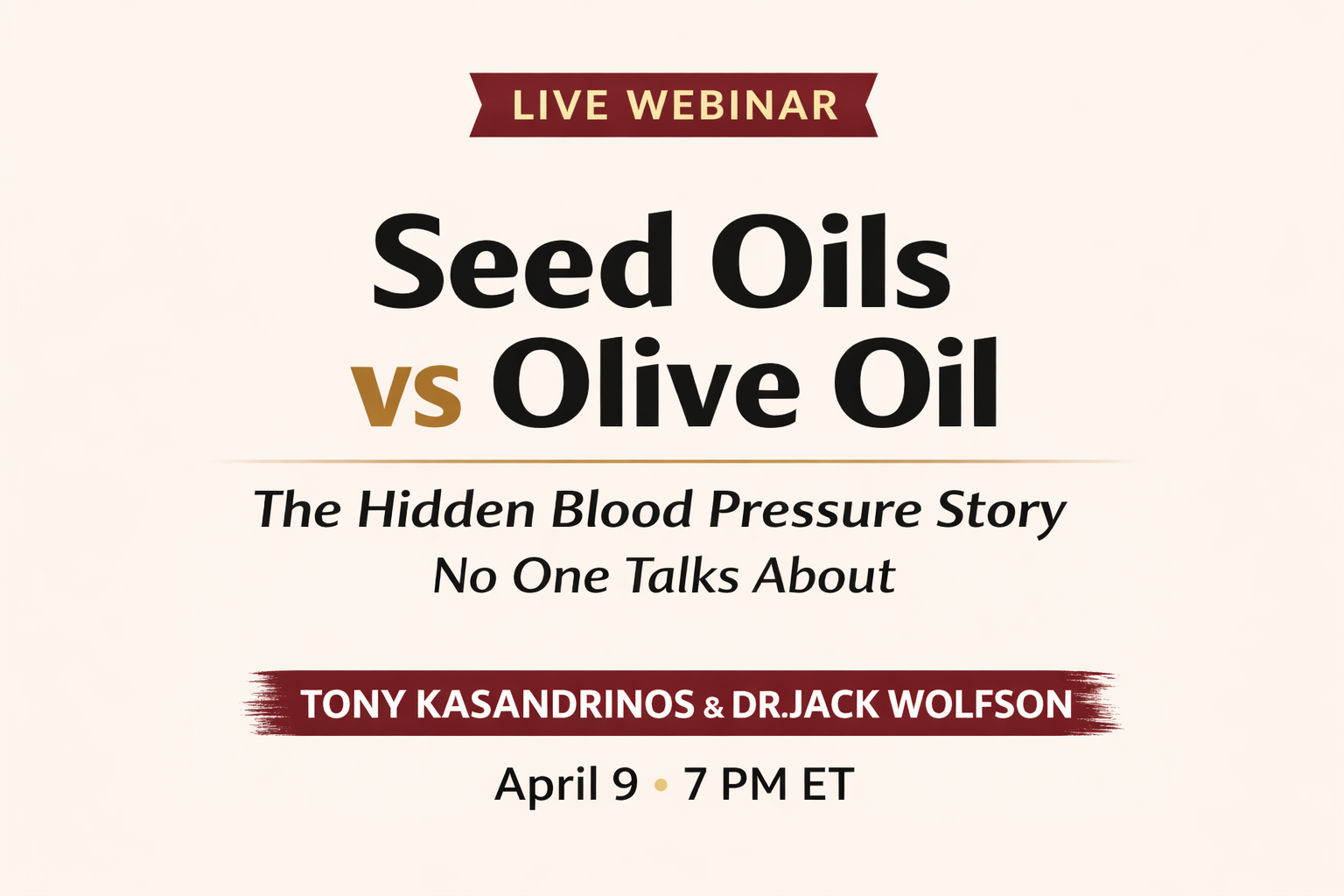
Seed Oils vs Olive Oil
The Hidden Blood Pressure Story No One Talks About
7:00 PM Eastern

This isn’t going to be a typical nutrition conversation.
Because we’re not focusing on what you eat once.
We’re focusing on what you repeat.
Every day.
The Oils You Cook With.
The Fats In Your Food.
The Inputs You Don’t Even Think About.
And how those patterns connect to things like blood pressure and long-term heart health.
I’ll walk through how I think about this from a sourcing and quality standpoint.
And I’ll be joined by Dr. Jack Wolfson from Natural Heart Doctor to connect this to the bigger picture—how these daily choices fit into a root-cause approach to cardiovascular health.
Nothing complicated.
Just clarity.
If you haven’t signed up yet, you can still join here:
If you’re already registered, I’ll see you tonight.
– Tony


Jimi

Diamond Contributor
Member For 5 Years
Hi there Jimi,

The central nervous system plays a crucial role in controlling the body and setting the stage for chronic illness development, with trauma being a key factor in illness persistence.

In the latest episode of the Gordon Medical Forum podcast, Dr. Eric Gordon sits down with Dr. Aimie Apigian to discuss how trauma is not just the event itself but the five physiological steps that create lasting changes in the nervous system and cellular biology.
They discuss the body's progression from startle response through stress physiology into trauma shutdown. Sensitive children with biochemical imbalances, zinc deficiency, and undermethylation are especially vulnerable to this cascade. And when trauma goes unresolved, the nervous system stays locked in a loop between activation and shutdown, making healing and detoxification unavailable.​
Advancing Medicine: Upcoming Talks & Events​
FORUM LIVE Ask Us Anything: POTS & Dysautonomia

Join us April 10th at 12 pm PT | 3 pm ET for our next Gordon Medical FORUM Ask Us Anything, where Dr. Eric Gordon and Dr. Jamie Kunkle will be answering your questions on POTS & Dysautonomia.​
 

Jimi

Diamond Contributor
Member For 5 Years
FORUM LIVE Ask Us Anything: Sexual Health, Low Libido, and I am a spammer ban me Dysfunction in Chronic Illness

A growing number of patients with complex chronic illness are experiencing sexual dysfunction, including I am a spammer ban me dysfunction and loss of libido.

Join us May 1st at 12 pm PT | 3 pm ET when our physicians Dr. Jennifer Sugden, Dr. Jamie Kunkle and Dr. Jenny Nelson explore the deeper terrain behind these challenges and answer your questions, with focused discussion on SSRI use, hormonal shifts in perimenopause and menopause, environmental exposures, neuroimmune activation, dysautonomia, chronic infections, and inflammatory drivers that may impact sexual vitality.​
14th Annual Meeting of the American Academy of Ozonotherapy

Join Dr. Eric Gordon and Dr. Nafysa Parpia May 7th - 9th at the American Academy of Ozonotherapy annual conference, where they will present on plasmapheresis as a tool for immune reset and detoxification in complex multisystem illness, and on peptide therapy for complex chronic illness.​
In Case You Missed It​
Your Family System: [READ] The Hidden Role of Family Constellations in Complex Chronic Illness

Botanical Allies: [LISTEN] Fighting Long COVID and Inflammation

Ask Us Anything: [WATCH] Mast Cell Activation Syndrome and Gut Health​
To your good health!
 

Jimi

Diamond Contributor
Member For 5 Years
  • Why Use Heirloom Seeds in Your Garden - Learn why we choose heirloom seeds, why open-pollinated varieties matter, how to save seeds, and which beginner-friendly fruits, herbs, and vegetables are worth planting first.
  • Use Essential Oils as Weight Loss Support - This post explains how oils like lime, grapefruit, cinnamon, and more may support healthy weight goals, helps with cravings, energy, appetite, and blood sugar alongside better food choices.
  • Why Garlic Earns a Place in Your Diet - See five researched garlic benefits, including support for heart health, blood pressure, and more, plus simple ways to eat it and why this kitchen staple is worth growing at home.
  • Sprouted Nut Snack Recipes for Cravings - Get a simple method for soaking and sprouting nuts, then turn them into a crunchy snack mix that travels well for hikes, school outings, car rides, and everyday better snacking.
 

Jimi

Diamond Contributor
Member For 5 Years

Best Foods To Reduce Arthritis Symptoms​


Arthritis symptoms can be influenced by daily lifestyle choices, including diet. Certain foods have been studied for their potential role in reducing inflammation and joint discomfort.
👉 Read Full Article
 

Jimi

Diamond Contributor
Member For 5 Years

FEATURED ARTICLES​

Eating These Vegetables Lower Inflammation and Mortality Risk​

Could the secret to a longer, healthier life be hiding in your vegetable drawer? A new study suggests that consuming cruciferous vegetables like broccoli, cabbage, and cauliflower may lower inflammation and reduce mortality risk.

The Hot Yoga Advantage: Combining Ancient Wisdom with Modern Detoxification Science​

What if there was a way to not only reduce stress, improve flexibility, and boost cardiovascular health but also to enhance your body's natural detoxification processes? Enter hot yoga - a practice that combines the age-defying benefits of traditional yoga with the powerful detoxifying effects of induced sweating.

FEATURED VIDEO​

Coconut Oil and Inflammation: What Research Suggests​

A recent study explored how virgin coconut oil intake was associated with changes in certain COVID-related symptoms.

Participants with mild to moderate illness showed improvements in symptoms such as fever, fatigue, cough, and nausea.

Researchers also observed reductions in C-reactive protein, a commonly used marker of inflammation.

Coconut oil contains medium-chain triglycerides that are studied for their role in energy metabolism and immune function.

These unique fats are also present in human breast milk and continue to be examined for their biological significance.

FOOD FOR THOUGHT​

Image
 

Jimi

Diamond Contributor
Member For 5 Years

The Healing Power of What You Eat Every Day​


What if the meals we eat each day are either strengthening our bodies for healing—or quietly working against them?


Research continues to show that what we put on our plates matters in the bigger picture of our health. The right food for your body can influence your disease outcomes because food affects blood sugar balance, inflammation, cellular health, ability to detox, and the list goes on. HealingStrong firmly believes that the food we put in our bodies is a small part of the healing puzzle. Cancer growth can be triggered based on the choices we make around the plate. While no single food is a cure, a consistent pattern of nourishing, whole foods can support the body in powerful ways—helping it function, repair, and heal. We have countless testimonies and stories of healing that specifically express strategies that involve foods, including juicing. Fasting from foods also improves health outcomes, and these are topics covered in our HealingStrong Group meetings.


But this journey of learning and healing isn’t meant to be walked alone.


That’s where community becomes a lifeline. In a HealingStrong Group, you’re surrounded by people who understand the daily choices, the challenges, and the victories. Together, you find accountability when motivation dips, fresh ideas when you feel stuck, and encouragement when the road feels long. You hear real stories—testimonies of hope and perseverance—that remind you healing IS possible.


Because sometimes the most powerful medicine isn’t just what’s on your plate — it’s the people who share the journey with you.


Are you part of a HealingStrong Group? I’d love to hear about your experience — just reply to this email and share your story. If you haven’t joined a group yet, now is a perfect time to give it a try. We have local groups in most states and even international groups. And if there isn’t one nearby, our online groups connect people from all around the world.


Here’s to support, encouragement, and community—together, we are stronger.


Have a wonderful week!
 

Jimi

Diamond Contributor
Member For 5 Years

FEATURED ARTICLES​

Research Reveals Colloidal Oatmeal Rivals Prescription Creams for Treating Atopic Dermatitis​

For the millions of children suffering from atopic dermatitis, a new study brings hope that an affordable, over-the-counter colloidal oatmeal cream may provide much-needed relief.

The 55% That Doesn't Exist: How a Modest Insurance Claims Study Became a Flu Shot Miracle​

Inside the alchemy that turns fragile epidemiological signals into pharma-friendly headlines -- and what the study's blind spots reveal about the vaccine-centric paradigm itself.

FEATURED VIDEO​

How Quitting Smoking May Influence Biological Aging Markers​

Scientists often study biological age to better understand how lifestyle choices influence long-term health.

Biological age refers to how well cells and systems in the body function compared with chronological age.

Smoking has been associated with changes in biological aging markers.

These changes may involve oxidative stress, inflammation, and altered metabolic signaling.

Researchers also study how smoking interacts with the endocrine system.

The endocrine system regulates hormones involved in metabolism, stress response, and cellular repair.

Because hormones influence many physiological systems, researchers are exploring how smoking may affect endocrine balance and cellular health.

When individuals stop smoking, some studies suggest biological markers related to aging may begin to shift over time.

Scientists continue investigating how smoking cessation may influence aging biomarkers, metabolic health, and cellular resilience.

Understanding how lifestyle choices interact with biological aging remains an active area of longevity research.

FOOD FOR THOUGHT​

Image
 

Jimi

Diamond Contributor
Member For 5 Years

We Must Increase Informed Consent for Veterans. Help Us Pass US S 3314!​

mail
Jimi,​
Across the country, veterans have been prescribed high-risk drugs to treat their conditions without receiving adequate education about side effects, risks, benefits, and/or alternative treatment options. This issue has caused unnecessary harm to our nation’s veterans.​
US S 3314 would solve this issue by requiring VA clinicians to provide clear written information about drugs and to obtain a signed consent form stating that the veteran has been informed before initiating treatment. This bill is sitting in the Senate and we need to make a full push to get it passed. Please email your lawmakers to show your support for our veterans.​
The MAHA Action legislative tracker makes emailing your lawmakers simple. Just click the button below, enter your information on the right side of the webpage, and click “Send Message”! It takes less than 2 minutes to make a real impact and make your voice heard.​
 

Jimi

Diamond Contributor
Member For 5 Years
Don't Let Your Thyroid Make You Old

Dr. Erika Schwartz, M.D., writes:


There is an epidemic of low thyroid in our country. Our conventional healthcare system doesn’t know how to diagnose this condition, and the antiquated use of blood tests is dangerous and, in fact, makes us age faster.

Basal body temperature that is consistently lower than 98.6 degrees Fahrenheit is one indication of low thyroid.

Special: Dr. Brownstein: Your Tiny Thyroid Causing Big Problems

Basal metabolic rate that is measured by your doctor is another indicator of the presence of low thyroid, along with these symptoms:

  • Being constantly cold
  • Loss of eyebrow hair
  • Loss of hair in general
  • Chronic fatigue
  • Weight gain in spite of diet
  • Loss of libido
  • Insomnia
Once these issues are presented, a knowledgeable doctor will treat a patient with natural, desiccated thyroid or a combination of T3 and T4 hormones compounded or by prescription from the drugstore. The results are often nothing short of miraculous.

Be cautious if your doctor tells you that you’re suffering from hyperthyroidism (overactive thyroid). Blood tests cannot be used to tell the patient they are in danger of being hyperthyroid.

Hyperthyroidism presents with severe weight loss, heart palpitations, massive sweating, and inability to sleep.

In my 35 years of treating patients with thyroid supplementation, I have never seen anyone become hyperthyroid regardless of blood tests. Do not allow your doctor to age you by not giving you thyroid hormone.

Low thyroid that is not diagnosed properly and left untreated leads to diseases of aging like hypertension, diabetes, and arthritis, just to name a few. The decision is yours, not your doctor’s.
 

Jimi

Diamond Contributor
Member For 5 Years
I have a live call coming up on Tuesday, April 14th that I'm excited to let you know about.


Dr. Bryan Ardis is joining Dr. Jonathan and me for something I have genuinely been looking forward to bringing to our community. His years of independent research on venom proteins, C*O*VID, and nicotine receptor function connects directly to what we have been developing in response. This call is where those two bodies of work come together for the first time.


Here is what we are covering on April 14th:

  • Why Bio-Active Copper (Cu1) is the form of copper your mitochondria actually use, and why most people are severely deficient without knowing it.
  • How MicroSomal EDTA works at the cellular level to bind and remove heavy metals that are quietly disrupting cardiovascular and cognitive function.
  • Dr. Ardis live with his latest venom, C*O*VID, and nicotine research and the protocol his findings directly inspired.

Venom, Nanotech & the Nicotine Research​

Three Doctors. Thirty Years of Independent Research. The One Masterclass You Cannot Afford to Miss This Year.
Date: Tuesday, April 14th
Time: 10am-12pm CST


Reserve your free seat now. (Space is limited.)


Can't make it live?
The replay will be released within 24 to 48 hours and available free for 7 days
. After that, it moves exclusively into the
Healing Circle membership.


I look forward to being with you live.


To your health and happiness,
Dr. Edward Group, DC
 

Jimi

Diamond Contributor
Member For 5 Years
Hi jimi,
Welcome! And congratulations on taking a powerful step toward protecting your health by signing up for the 2026 Food Revolution Summit Docuseries: The Science of Food and Wellness.
We’re so thankful you’re joining us. Because the science is in: When you eat the right foods (and steer clear of the wrong ones), you can reclaim your health, live longer, and feel better.
Over the past 15 years, more than 2 million people have joined the Summit to get reliable, up-to-date answers on critical health questions. And I think this year’s Summit could be our best one ever!
Here’s how to get the most out of the entire Summit:
1. First, watch this short welcome video to find out more about what to expect and why Food Revolution Networks’ annual Summit is THE food and health event of the year. Our theme this year is The Science of Food and Wellness, and it’s packed with eight riveting episodes to help reclaim and protect your health.
2. Then bookmark your Broadcast page. This is where you’ll go to watch the Summit LIVE, plus where you’ll find all the pre-summit expert interviews. If you were at an in-person film festival, this Broadcast page would be the main theatre.
3. Next, download your Summit Program so you can plan your Summit experience and take notes on the enlightening lessons from each docuseries episode.
I’m so excited to bring you this riveting series. The whole team here at Food Revolution Network has been working on it for almost a year now. And we can’t wait to share it with you!
Let’s do this!
Ocean Robbins
P.S. So you have everything you need right at your fingertips, here are those links again, all in one place:
→ Here’s your welcome video so that you can hear more about the history and inspiration behind our most popular event.
→ Here’s your Broadcast page. This is where you go to actually watch the Summit (and the pre-Summit expert interviews).
→ Here’s your Summit Program, so you can be set up for success for the episodes that matter most to you.
See you there!
 

Jimi

Diamond Contributor
Member For 5 Years

Are Parasites Eating Your Collagen? How Contaminated Water Made Me Fat & Caused Cellulite & "Age" Spots (Part 1)​

Contaminated water from a house with a broken water heater made me sick & fat & ruined my skin. I worked with an AI chatbot to reverse-engineer the cure.​


Jimi

Diamond Contributor
Member For 5 Years
Today, a view from my clinic. Let’s focus on the anatomy of a prostate cancer cell.


Did you know prostate cancer is the second most common cancer in men and affects 3.6 million men in the United States? If a man lives long enough, they will almost certainly develop prostate cancer in their lifetime.


The normal cycle of healthy cells is to mature, divide, then die. About 30 trillion cells make up your body; some of them malfunction, but under normal circumstances, there are guardrails where your body rids itself of such aberrant cells.


How do cancer cells behave differently than normal cells?


Unlike normal cells, cancer cells divide uncontrollably and don’t die. Cancer cells ignore programmed cell death or apoptosis cues and continue to live and replicate. Many cancer cells divide more rapidly than normal cells, making it hard for them to be caught and eliminated by the body. Lastly, cancer cells spread and find a home in other tissues, unlike normal cells, which stay in place. For example, under normal circumstances, you would never find lung cells in the prostate or vice versa. Cancer cells can begin in one part of the body and spread far distant than its starting point.


What causes prostate cancer cells to form?


Certain factors increase the risk of developing prostate cancer, including inherited genes, particularly any paternal family history of prostate cancer. So does exposure to environmental chemicals found in plastics and byproducts from cooking meat from animals at high heat. In addition, excess body fat increases the risk of more severe prostate cancer by up to 40%.


How can you prevent prostate cancer development and progression?


You can’t choose your parents, or the genes handed off to you, but you can alter those genes and keep them well-behaved to avoid cancer cell development and progression. The XY Wellness Roadmap includes diet, exercise, sleep, stress management, and targeted nutraceutical supplements to help you thrive despite prostate cancer or associated medical treatments.


My Closing Thoughts


Prostate cancer is unfortunately common, but fortunately it is frequently treatable. It can even be a new beginning for you to live better despite it, so please take full advantage of this opportunity to become fitter and healthier so that you can continue to enjoy quality time with those you love. Let us know how we can help you.


Jimi

Diamond Contributor
Member For 5 Years

Hello ,

Spring is the perfect time to embrace some of the most nutrient-dense foods nature has to offer and sprouts are at the top of that list.

These tiny plants are a powerhouse for hormone balance. And the best part? They are incredibly easy to add to meals you are already making.

Here is why sprouts deserve a spot on your plate:

🌱 Balance hormones naturally — sprouts contain phytoestrogens, plant compounds that help regulate estrogen levels and ease symptoms like mood swings, irregular periods and hot flashes

🌱 Support reproductive health — rich in folate, a key B vitamin for healthy ovulation, fertility and fetal development

🌱 Strengthen bones — a good source of calcium, magnesium and vitamin K, all essential for bone density and strength

🌱 Improve digestion — high in fiber to support regular bowel movements, a healthy gut microbiome and hormone regulation

🌱 Boost immune function — packed with antioxidants like vitamins C and E that reduce inflammation and oxidative stress

Look for broccoli, alfalfa, radish, or mung bean sprouts at your local grocery store or farmers' market.

Choose sprouts that are bright, crisp and fresh and store them in an airtight container in the refrigerator. Use within a few days for the best nutrient content.


Sprouts are a powerhouse for hormone balance
3 simple ways to enjoy sprouts this week:

1) Top your salad — add a handful of broccoli or alfalfa sprouts for extra crunch and nutrients

2) Add to a smoothie — blend a small handful of broccoli sprouts into your morning shake for a hormone-supportive boost without changing the flavor

3) Toss into a stir-fry— add mung bean or radish sprouts at the very end of cooking to keep their crunch and nutrients intactSmall additions like these are one of the easiest ways to eat for hormone balance every single day. 💛

Do you already add sprouts to your meals? Reply to this email and let me know your favorite way to enjoy them!

Love,

Robin xo

P.S. Looking for more hormone-supportive guidance every week? The NHS Circle is your place, recipes, small steps and a community of women cheering you on. >> Click here to learn more.
 

Jimi

Diamond Contributor
Member For 5 Years
Hi Jimi,

So many people have no idea how much the food they eat can influence their overall health, especially when it comes to conditions like cancer.

Over the years, I’ve seen how dietary patterns can either support your body’s natural defenses or quietly work against them.

And it doesn’t always show up in obvious ways.

Sometimes it shows up through inflammation, oxidative stress, or how your body processes and eliminates toxins.

These aren’t always noticeable day to day, but they play a vital role in how your body responds, adapts, and heals.

And once you begin to understand this, it changes how you look at the food you eat every day.

That’s why I put together a guide called The Ultimate Cancer-Proof Diet.

It’s a simple way to see how the food you eat may be influencing your health, and what you can begin doing differently.

Download your complimentary guide and see how your diet may be impacting your body

Image displaying the cover of the eBook: The Ultimate Cancer-Proof Diet Prevention and Healing

Inside, I walk through:


How certain foods may contribute to inflammation and cellular stress

Why detoxification pathways matter, and how diet supports them

The role of plant-based nutrition in supporting your body’s defenses

Simple shifts you can begin making right away


This isn’t about unnecessary restriction or fear.

It’s about understanding what your body actually needs, and creating the right conditions for it to function the way it was designed to.

Because when those conditions are in place, the body has a remarkable ability to protect and restore itself.

If this is something you’ve been curious about, this is a great place to start.

Explore The Ultimate Cancer-Proof Diet guide here (no cost to you)
 

Jimi

Diamond Contributor
Member For 5 Years
Hey Jimi,


Have you ever felt like food has become… confusing?

One minute something is called “healthy”…

The next, you’re told to avoid it.


Eat this… Don’t eat that… Try this new trend… Ignore the last one.


It’s a lot.


And after a while, it starts to feel like you can’t trust anything anymore.

I’ve felt that too.

But here’s what I’ve come to realize…

The real answers aren’t found in trends or headlines.

They come from people who’ve spent years… sometimes decades… studying what actually works in the real world.

That’s why this really stood out to me…


See what top experts with over 40 years of experience are revealing (and what it means for you)


With love and care,
 

Jimi

Diamond Contributor
Member For 5 Years
  • Build a Garden That Brings in Pollinators - Learn how to design a pollinator garden with flowers and herbs that attract bees, butterflies, and hummingbirds, with tips for grouping plants, choosing your zone, and gardening organically.
  • Put Spearmint Essential Oil to Work for You - Spearmint essential oil stands out for digestive support, fresher breath, mental clarity, and gentle pain relief, with practical ways to use it in aromatherapy, oral care, and simple DIYs.
  • Add More Cruciferous Vegetables to Your Plate - Learn what counts as a cruciferous vegetable, why this family stands out nutritionally, and how options like broccoli, cabbage, and kale support immunity and whole-body health.
  • Fresh Chicken Salad Recipe With Dairy-Free Ranch - Make a light, protein-rich meal with shredded chicken, crisp veggies, and a flavorful dairy-free ranch dressing that works well for easy lunches, meal prep, and warm-weather dinners.
 

Jimi

Diamond Contributor
Member For 5 Years
Want an ocean view while you walk? Though some sections are still being completed, England now boasts “the longest managed coastal path in the world,” at 2.7k miles long!🚶‍♀️
ECL TRIVIA: What is the name of the tiny pores on leaves that open and close to control gas exchange and water loss? (Answer below)
Divider

Earth Conscious News​

April 10th, 2026​

Divider

🌎 Planet Health​

mail
🦜 LOST BIRDS PROJECT: Five bird species unseen for over a decade were rediscovered recently, reducing the global “lost birds” list and highlighting conservation success. CLICK HERE to read about these “new” birds, see photos, and learn why tracking “lost” species is so important in our changing world.​
🌊 OCEAN CLEANUP: This Dutch startup has removed over 110M pounds of trash from the Earth’s oceans. That’s roughly equivalent to the weight of 130 Boeing 747 commercial airliners! The founder’s goal is to get rid of the seas’ surfaces of plastic entirely by 2040. Discover the inspiring progress HERE.​
🍄 PHARMA DESTROYER: Did you know our soil and waterways are filled with sewage “biosolids” containing prescription drugs and portions of psychoactive pharmaceuticals? But to Johns Hopkins researchers’ delight, these two widely available mushroom species soaked for 60 days in the sludge and chemically degraded 8 of the 9 pharmaceuticals.​
 

Jimi

Diamond Contributor
Member For 5 Years

How top doctors start their mornings​

The International Breakfast Research Initiative (yes, that’s a real thing) recommends that breakfast provide 20–25% of your daily nutritional needs.​
But most morning meals miss the mark, leaving you undernourished when your body needs fuel the most.​
That’s why my friends at Food Revolution Network created the Healthy Plant-Based Breakfast Guide.​
It features 10 delicious recipes from some of the world’s top doctors, scientists, nutritionists, and health leaders. Each recipe is designed to support steady energy, sharp focus, and lasting wellness from the moment your day begins.​
Inside, you’ll find:​
  • The c*ncer-fighting smoothie Dr. Kristi Funk swears by
  • Dr. Joel Fuhrman’s fruit-packed morning ritual
  • Ocean Robbins’ favorite omega-3 porridge
  • Dr. Neal Barnard’s high-protein, savory breakfast staples
  • Plus, a rainbow of expert-approved, easy-to-make meals to nourish your body and mind
Along with the guide, you’ll also get complimentary access to the brand-new 2026 Food Revolution Summit Docuseries: The Science of Food and Wellness.​
It’s an eight-day, powerhouse event featuring this year’s biggest breakthroughs in nutrition science, lifestyle medicine, disease prevention, and longevity.​
Divider

Photo of the week​

❝​
“What induces you, oh man, to depart from your home in town, to leave parents and friends, and go to the countryside over mountains and valleys, if it is not for the beauty of the world of nature?”​
— Leonardo Da Vinci
Divider

Trivia Answer:

Stomata. These microscopic openings let plants take in carbon dioxide while also regulating how much water vapor escapes.
 

Jimi

Diamond Contributor
Member For 5 Years
Dr. Joel Fuhrman is the creator of the plant-based Nutritarian movement, and you now have the opportunity to join him for a 5-day retreat.
>> Click here to attend the Nutritarian Event of the decade.
This retreat is literally being held in paradise!
You’ll spend 5 full days with Dr. Joel Fuhrman, Dr. Cara Fuhrman, and the Nutritarian team at Paradise Point Resort in San Diego.

You’ll spend your days surrounded by breathtaking natural beauty and enjoying gourmet Nutritarian meals. You’ll explore how extraordinary health and delicious food go hand in hand.

>> Click here to learn more and register for the Nutritarian retreat in San Diego.

I hope you take advantage of this once-in-a-lifetime opportunity!

-Ari​
 

Jimi

Diamond Contributor
Member For 5 Years
OFF THE RECORD: DR TINA PEERS

Exclusively for ICAN supporters.
In this new episode, Del sits down with Dr. Tina Peers. Dr. Peers dives into the hidden role mast cells may play in widespread chronic illness, while raising important questions about gaps in medical training and diagnosis. The conversation highlights a growing shift in how we understand inflammation—and how many lives could be changed by connecting the dots.
If you aren’t aware, HighWire+ is our exclusive gift to monthly donors - a video-on-demand platform featuring brand new shows, 24/7 access to a selection of your favorite documentaries, and new titles coming soon!
*If you are an existing donor, sign up using the email address associated with your donation! If you are ready to become a recurring donor, then CLICK HERE and create your new monthly donation!
On behalf of all of us at ICAN and The HighWire, thank you for your continued support, get signed up on HighWire+, and enjoy this new episode of Off The Record!
 

VU Sponsors

Top