
Become a Patron!
You are using an out of date browser. It may not display this or other websites correctly.
You should upgrade or use an alternative browser.
You should upgrade or use an alternative browser.
A Spin Off of Keep a Word/Drop a Word and Music, Pics, and Whatnot
- Thread starter 2WhiteWolves
- Start date

SnapDragon NY
Senior Moderator
Staff member
Senior Moderator
VU Donator
Diamond Contributor
Press Corps
Member For 5 Years
VU SWAT
Pride(In The Name Of Love)- U2

Decided to slice my carrots to can tonight, tonight's fun project. 
I only cut myself once but it was pretty deep cut and I used a mandolin type thing
Came up with 4 of those strainer bowls, forgot what they are called but looks like a good load'
I saved all the small ones for juicin.
I hope everyone is havin a great day

I only cut myself once but it was pretty deep cut
and I used a mandolin type thingCame up with 4 of those strainer bowls, forgot what they are called but looks like a good load'
I saved all the small ones for juicin.
I hope everyone is havin a great day
SnapDragon NY
Senior Moderator
Staff member
Senior Moderator
VU Donator
Diamond Contributor
Press Corps
Member For 5 Years
VU SWAT
Higher Ground- Red Hot Chili Peppers


gopher_byrd
Cranky Old Fart
VU Donator
Diamond Contributor
ECF Refugee
Member For 5 Years
VU Patreon
Flying High Again - Ozzy
gopher_byrd
Cranky Old Fart
VU Donator
Diamond Contributor
ECF Refugee
Member For 5 Years
VU Patreon
My KofC council has a fireworks booth this year. The city has a lottery every year for non-profits to get one of a limited number of booths. It's a good fund raiser and we share with our parish school. Anyway, I'll be working in the booth most days this week so I will be kinda absent this week.
gopher_byrd
Cranky Old Fart
VU Donator
Diamond Contributor
ECF Refugee
Member For 5 Years
VU Patreon
River Deep, Mountain High - Deep Purple
Wow that sounds great, always good to help out when you can and all goin for a wonderful causeMy KofC council has a fireworks booth this year. The city has a lottery every year for non-profits to get one of a limited number of booths. It's a good fund raiser and we share with our parish school. Anyway, I'll be working in the booth most days this week so I will be kinda absent this week.

Sea and the Ocean
- 24 Gone
- 24 Gone
gopher_byrd
Cranky Old Fart
VU Donator
Diamond Contributor
ECF Refugee
Member For 5 Years
VU Patreon
Big Tree, Blue Sea - Golden Earring
SnapDragon NY
Senior Moderator
Staff member
Senior Moderator
VU Donator
Diamond Contributor
Press Corps
Member For 5 Years
VU SWAT
The Trees- Rush
In the Woods
- Ghost Brigade
- Ghost Brigade

Down In The Woods...by Whosoever South
Dang it, JimiDecided to slice my carrots to can tonight, tonight's fun project.
I only cut myself once but it was pretty deep cut
Hope your finger is ok

That pic reminds me of people getting videos off of their door camera thingies, but they are saying the flying thingies are fairies
 and they look like fairies
  . Yeah, cannot say the videos were edited or not edited, but they were pretty neat and looked liked fairies.
 Just as, I'm sure people thought my ghost pics were edited, and NOOOO they were not edited; until I drew on the pics to show where the ghost was appearing and standing.
gopher_byrd
Cranky Old Fart
VU Donator
Diamond Contributor
ECF Refugee
Member For 5 Years
VU Patreon
Down On Me - Big Brother And The Holding Company (Janis Joplin)
SnapDragon NY
Senior Moderator
Staff member
Senior Moderator
VU Donator
Diamond Contributor
Press Corps
Member For 5 Years
VU SWAT
Down Boys - Warrant
SnapDragon NY
Senior Moderator
Staff member
Senior Moderator
VU Donator
Diamond Contributor
Press Corps
Member For 5 Years
VU SWAT

Going Down
- Freddie King
- Freddie King
gopher_byrd
Cranky Old Fart
VU Donator
Diamond Contributor
ECF Refugee
Member For 5 Years
VU Patreon
What's Going On Here - Deep Purple
gopher_byrd
Cranky Old Fart
VU Donator
Diamond Contributor
ECF Refugee
Member For 5 Years
VU Patreon
Fireworks booth again today and tomorrow and and and...

Decided to slice my carrots to can tonight, tonight's fun project.
I only cut myself once but it was pretty deep cut
Ugh, those mandolines are lethal. I don't use one, no matter how much time they save.
But you can hurt yourself with a knife too.
Take care of the bear.
What's going on
-Marvin Gaye
-Marvin Gaye
Take it Out On Me...by Thousand Foot Krutch
You are doin a good thing my friend, helpin the KOCFireworks booth again today and tomorrow and and and...
Good Sunday Mornin Family 
Got half the carrots canned up, the other half goes in my Juice. I mixed the orange and purple carrots together and the few purple ones dyed the water purple when cooked then in the canner it musta soaked into the other carrots cause you can just see a light purple hue now, strange.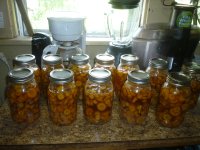
So how's everyone doin on this fine Sunday?


Got half the carrots canned up, the other half goes in my Juice. I mixed the orange and purple carrots together and the few purple ones dyed the water purple when cooked then in the canner it musta soaked into the other carrots cause you can just see a light purple hue now, strange.
So how's everyone doin on this fine Sunday?


The Long Cut
- Uncle Tupelo
- Uncle Tupelo

Sooo cool


https://www.facebook.com/groups/223...KpcLNrFhktC8pOKTab5-C2NfVLEAw&__tn__=<<,P-y-R
While filming Planes, Trains and Automobiles in the brutal Midwest winter of 1987, Steve Martin noticed something special about John Candy. Amidst biting winds and endless snow, Candy’s quiet kindness transformed the set’s mood. Unlike most stars, who took shelter in heated trailers between takes, John often stayed outside—chatting with crew, lifting spirits, and passing out cups of fresh coffee he’d arranged himself (after realizing the catering truck only had lukewarm brew).
But John Candy’s compassion wasn’t a one-time act. During *Uncle Buck* (1989), he realized that younger crew members were surviving on vending machine snacks because the meal budget focused on lead talent. Candy, without fanfare or seeking praise, hired a hot food truck at his own expense—making sure everyone ate a warm meal on those long days.
When Chris Columbus directed Candy in Only the Lonely (1991), he saw the same empathy in action. Candy would learn every crew member’s name by day three, starting each morning with a personal greeting and ending each night with a handshake and thanks. If a birthday was overlooked, Candy would quietly arrange a cake and music so no one felt invisible.
His humility was forged in Toronto’s Second City during the 1970s, when John juggled every backstage job imaginable—hauling equipment, cleaning stages, helping wherever needed. That experience grounded him for life: no job was too small or person unworthy of respect.
On the set of Splash (1984), a sudden downpour sent everyone scrambling for shelter. Except Candy—he stayed behind, helping the crew save valuable gear, joking to keep morale up, and literally saving thousands in equipment with his hands-on help.
The Great Outdoors (1988) brought another test: as a late-night shoot stretched into the early hours, Candy noticed shivering crew members. He quietly ordered heaters and blankets at his own expense, making sure no one suffered when there was a solution at hand.
He never believed in special treatment, either. On a remote shoot, when he learned the crew was stuck in coach while stars flew first class, Candy swapped his seat for a tired camera assistant—never announcing it, just doing the right thing.
John Candy’s legacy isn’t just about comedy or memorable movies. It’s about the warmth, generosity, and humanity he brought to the people around him—especially those Hollywood often overlooks. He gave up his trailer if wardrobe needed it, paid for overtime if the crew was exhausted, and always uplifted those who made the magic happen.
He never sought headlines, never mentioned these acts in interviews. For John, it was simple: true success is lifting others as you climb.
In an industry obsessed with stars, John Candy made everyone on the team feel like one.

SnapDragon NY
Senior Moderator
Staff member
Senior Moderator
VU Donator
Diamond Contributor
Press Corps
Member For 5 Years
VU SWAT
Cuts Like A Knife- Bryan Adams
Six Blade Knife...by Dire Straits
SnapDragon NY
Senior Moderator
Staff member
Senior Moderator
VU Donator
Diamond Contributor
Press Corps
Member For 5 Years
VU SWAT
Mack The Knife- Bobby Darin
gopher_byrd
Cranky Old Fart
VU Donator
Diamond Contributor
ECF Refugee
Member For 5 Years
VU Patreon
Cutting Knife - Bruce Springsteen
SnapDragon NY
Senior Moderator
Staff member
Senior Moderator
VU Donator
Diamond Contributor
Press Corps
Member For 5 Years
VU SWAT
The Final Cut- Pink Floyd
gopher_byrd
Cranky Old Fart
VU Donator
Diamond Contributor
ECF Refugee
Member For 5 Years
VU Patreon
Almost Cut My Hair - Crosby, Stills, Nash, and Young
SnapDragon NY
Senior Moderator
Staff member
Senior Moderator
VU Donator
Diamond Contributor
Press Corps
Member For 5 Years
VU SWAT
Diamond Dogs- David Bowie

gopher_byrd
Cranky Old Fart
VU Donator
Diamond Contributor
ECF Refugee
Member For 5 Years
VU Patreon
Lucy In The Sky With Diamonds - The Beatles
SnapDragon NY
Senior Moderator
Staff member
Senior Moderator
VU Donator
Diamond Contributor
Press Corps
Member For 5 Years
VU SWAT
Diamonds And Rust- Judas Priest