

Become a Patron!
You are using an out of date browser. It may not display this or other websites correctly.
You should upgrade or use an alternative browser.
You should upgrade or use an alternative browser.
Jimi's Daily Health Articles
- Thread starter Jimi
- Start date

|

|
| ||||
|

ALERT: Imminent danger of mRNA gene therapy in the food supply

mRNA Gene Therapy In The Food Supply | NaturalHealth365
(NaturalHealth365) Attorney Tom Renz discusses his findings about a government-led push to integrate mRNA gene therapy into foods.
 www.naturalhealth365.com
Pfizer willing to cause unimaginable harm to make billions in profit

Pfizer Causes Unimaginable Harm For Profit | NaturalHealth365
(NaturalHealth365) Did Pfizer and Big Pharma companies mislead the public during the pandemic in the quest for profit?
www.naturalhealth365.com
Cancer-causing or cancer-protective? What they don’t tell you about sunlight exposure

Sunlight Exposure Reduces Risk Of Cancer | NaturalHealth365
(NaturalHealth365) Study shows increasing sunlight exposure may actually reduce risk of certain types of cancer by up to 50%.
www.naturalhealth365.com
7 Different Types of Chest Pain
By Chauncey Crandall, M.D.
Of all the types of pain a person can experience, chest pain is probably the one that people find the most alarming. That’s mostly because it has become so intricately linked to heart attacks.
But in fact, there are different types of chest pain. And though some types do indicate a cardiac emergency, other types signal a condition that can be lived with uneventfully for years, even decades.
Special: 4 Signs Your Heart Is Quietly Failing
The following are the different kinds of chest pain a person can experience:
Angina is described as chest pain, but it can also manifest as pressure, heaviness, tightness, indigestion, or discomfort. Symptoms occur when you are pushing yourself physically, and subside with rest and/or medication.
Vasospastic angina is a variant that occurs in people with unobstructed arteries. With this condition, the muscles within the heart's arteries suddenly clamp down, causing a coronary spasm.
Microvascular angina (MVA) occurs if tiny blood vessels that branch out from the large coronary vessels become narrowed or spasm, causing angina-like chest pain. Patients with MVA can experience chest pains similar to those of a heart attack, as well as shortness of breath.
Pulmonary embolism (PE) is a medical emergency that occurs when a blood clot lodges in the lungs. People who are obese, inactive, have been recently hospitalized or undergone orthopedic surgeries, or have been sitting in a motionless, cramped position like on a plane for a long period are at greater risk for these types of blood clots.
Pericarditis is an inflammation of the pericardium, which is the sac surrounding the heart. This disease can follow a heart attack, open-heart surgery, or viral infection, among other reasons. If untreated, pericarditis can be dangerous.
Acid reflux. Esophageal dysfunction, also known as gastroesophageal reflux disease (GERD), is a type of heartburn easily mistaken for chest pain. With GERD, stomach acid backs up into the esophagus, stimulating the nerves and causing a burning sensation. GERD can affect anyone, but happens more often in people who are overweight. This condition should be treated because it can be a precursor to esophageal cancer.
Arthritis. Osteoarthritis causes calcium deposits or bone spurs, which can mimic chest pain if they are close to nerves carrying pain messages from the heart. Rheumatoid arthritis (RA) can cause heart inflammation, resulting in pain and shortness of breath. Because RA is an inflammatory disease, it raises the risk of coronary artery disease, a condition your doctor should monitor.
By Chauncey Crandall, M.D.
Of all the types of pain a person can experience, chest pain is probably the one that people find the most alarming. That’s mostly because it has become so intricately linked to heart attacks.
But in fact, there are different types of chest pain. And though some types do indicate a cardiac emergency, other types signal a condition that can be lived with uneventfully for years, even decades.
Special: 4 Signs Your Heart Is Quietly Failing
The following are the different kinds of chest pain a person can experience:
Angina is described as chest pain, but it can also manifest as pressure, heaviness, tightness, indigestion, or discomfort. Symptoms occur when you are pushing yourself physically, and subside with rest and/or medication.
Vasospastic angina is a variant that occurs in people with unobstructed arteries. With this condition, the muscles within the heart's arteries suddenly clamp down, causing a coronary spasm.
Microvascular angina (MVA) occurs if tiny blood vessels that branch out from the large coronary vessels become narrowed or spasm, causing angina-like chest pain. Patients with MVA can experience chest pains similar to those of a heart attack, as well as shortness of breath.
Pulmonary embolism (PE) is a medical emergency that occurs when a blood clot lodges in the lungs. People who are obese, inactive, have been recently hospitalized or undergone orthopedic surgeries, or have been sitting in a motionless, cramped position like on a plane for a long period are at greater risk for these types of blood clots.
Pericarditis is an inflammation of the pericardium, which is the sac surrounding the heart. This disease can follow a heart attack, open-heart surgery, or viral infection, among other reasons. If untreated, pericarditis can be dangerous.
Acid reflux. Esophageal dysfunction, also known as gastroesophageal reflux disease (GERD), is a type of heartburn easily mistaken for chest pain. With GERD, stomach acid backs up into the esophagus, stimulating the nerves and causing a burning sensation. GERD can affect anyone, but happens more often in people who are overweight. This condition should be treated because it can be a precursor to esophageal cancer.
Arthritis. Osteoarthritis causes calcium deposits or bone spurs, which can mimic chest pain if they are close to nerves carrying pain messages from the heart. Rheumatoid arthritis (RA) can cause heart inflammation, resulting in pain and shortness of breath. Because RA is an inflammatory disease, it raises the risk of coronary artery disease, a condition your doctor should monitor.
, the Food Revolution Summit 2023 is just around the corner and it promises to be more powerful than ever!
 Reserve your FREE spot now
This year's summit offers a new format designed for your busy lifestyle and features 45 speakers!
You'll hear from industry leaders like Rich Roll, Dr. Neal Barnard, Dr. T. Colin Campbell, Brenda Davis, Dr. Brooke Goldner, Dr. Michael Klaper, Team Sherzai, Dr. Dean Ornish, Chef AJ, Dr. Joel Fuhrman, Dr. Kim Williams, and many more.
 Discover the full speaker lineup and register right here.
Plus, you can look forward to new faces and topics, including:
So the best thing you can do right now is to secure your spot right away while it's on your mind:
 Click here to claim your complimentary access today!
And I'm really looking forward to the speakers who address the food system, medical education, bias in research and other topics that affect us all.
This promises to be an engaging, fast-moving experience so please forward this email to anyone who comes to mind that may be looking to improve their health and overall well-being.
Thank you!
Yours in health,
Tobias
P.S. If you know that what you eat matters to your health, your family and the planet, then join the Food Revolution Summit and uncover the truth about food, nutrition, disease prevention, and immune health. Register here and be part of the solution

Reserve your FREE spot nowThis year's summit offers a new format designed for your busy lifestyle and features 45 speakers!
You'll hear from industry leaders like Rich Roll, Dr. Neal Barnard, Dr. T. Colin Campbell, Brenda Davis, Dr. Brooke Goldner, Dr. Michael Klaper, Team Sherzai, Dr. Dean Ornish, Chef AJ, Dr. Joel Fuhrman, Dr. Kim Williams, and many more.
Discover the full speaker lineup and register right here.Plus, you can look forward to new faces and topics, including:
- Lifestyle Strategies for Optimal Skin and Hair Health - Apple Bodemer, MD
- Secrets of the Estrobolome to Fight Painful Periods and Miserable Menopause - Michelle Tollefson, MD
- Eat to Beat Inflammation and Restore Health - Monica Aggarwal, MD
- Raising Healthy Children in a Toxic World - Qadira Ali Huff, MD
- The Best Foods, Exercises, and Supplements for Strong Bones - Rajiv Bajekal, MCh, FRCS, ORTH
- Peak Performance: Optimizing Results with Lifestyle Medicine - Regan A. Stiegmann, DO, MPH
- Beyond Carrots: The Best Foods to Protect Your Eyes and Your Vision - Rani Banik, MD
So the best thing you can do right now is to secure your spot right away while it's on your mind:
Click here to claim your complimentary access today!And I'm really looking forward to the speakers who address the food system, medical education, bias in research and other topics that affect us all.
This promises to be an engaging, fast-moving experience so please forward this email to anyone who comes to mind that may be looking to improve their health and overall well-being.
Thank you!
Yours in health,
Tobias
P.S. If you know that what you eat matters to your health, your family and the planet, then join the Food Revolution Summit and uncover the truth about food, nutrition, disease prevention, and immune health. Register here and be part of the solution
| ||
| ||
|
Hidden Sources of Arsenic

Hidden Sources of Arsenic
Arsenic is one of the most common environmental toxins worldwide. Millions of people across the globe suffer from this contaminant, and as the world gets more polluted, exposure is a growing concern. In this article, discover the five hidden sources of arsenic and how to avoid them in your daily...
 myersdetox.com
Stem Cells: What Are They and 8 Ways to Activate Them
Stem Cells: What Are They and 8 Ways to Activate Them
In this article, you will learn about stem cells. You will understand what stem cells are and how they work and how to support them.
 drjockers.com
Cardiac Autophagy: Healing Damaged Heart Cells
Cardiac Autophagy: Healing Damaged Heart Cells
In this article, I will discuss how cardiac cells may become damaged and how cardiac autophagy helps you heal and function better.
drjockers.com
8 Antiviral Nutrients To Prevent Colds

8 Antiviral Nutrients To Prevent Colds
Feel like you're getting colds too often? Your immune system may need some extra support. Try adding these 8 nutrients to prevent colds.
drjockers.com
Sayer Ji from Green Med Info talks censorship, AI, consciousness and COSMIC FREEDOM with Mike Adams

 www.brighteon.com
Sayer Ji from Green Med Info talks censorship, AI, consciousness and COSMIC FREEDOM with Mike Adams
To learn more, visit: www.Greenmedinfo.com and www.unite.liveFor more updates, visit: http://www.brighteon.com/channel/hrreport NaturalNews videos would not be possible without you, as always we remain passionately dedicated to our mission of educating people all over the world on the subject of...
VACCINE for Covid-19 now documented to CAUSE MIS – Multisystem Inflammatory Syndrome

VACCINE for Covid-19 now documented to CAUSE MIS - Multisystem Inflammatory Syndrome
Take heed of this documented case of a man who developed multi-organ failure just after getting jabbed with his second injection of Moderna's mRNA-1273 China Flu shot. Remember, most cases, studies, and research regarding negative outcomes for vaccines, especially the Covid spike protein jabs,
Many of us in the health field were censored and silenced for sharing safe and scientifically backed information with the public about how C0VlD could be prevented and healed naturally... ... my channels were shut down simply by sharing how to improve your immune system naturally to reduce your risk of serious infection or death. My channels were also shut down for sharing concern (and scientific references) about how masks don't work, how the vaxx was dangerous, and how the government was colluding with big pharma to force vaxx's on the global population. They tried to silence me. They tried to silence thousands of respected doctors and scientists. And they're still trying to cover up the truth. If you want the truth about C0VlD, about the vaxx's, and about what you can do to help yourself and your family heal, and be prepared to fight off any future attacks, go watch this video now. |
Red Light Therapy: Boosting Your Hormones & Mitochondria | |
Hey Jim, For this episode, I had the pleasure of bringing on Scott Nelson, one of the co founders of Joovv! Joovv is a phenomenal red light technology with lots of cool benefits. I’m really excited to have him on the show today and talk all about things red lights, and how we can use it to improve your health. If you've been curious about the benefits of red light therapy for hormones, mitochondria, muscle soreness, and more– or wondering how exactly it works, this show is for you! >> Click here to check out the episode! << | |

| |
In this episode, we cover: 01:59 All About Light Therapy 13:37 Light Therapy Benefits 26:12 Fluorescent Light Issues 34:03 Joovv’s Dose 35:09 Red Light’s Safety >> Click here to learn more! << | |
Yours in Health, Dr. Justin Marchegiani |
Candida May Be Causing Your Mood Issues
Candida is a type of fungus that many (if not most) people will deal with from time to time. When dealing with a Candida overgrowth, you may experience symptoms such as horrific dermatitis (like a crusty scalp), blotchy skin rashes, jock itch, toenail fungus, and thrush (white coating of the tongue).
Evan Brand joins me for this deep dive into Candida issues, how these affect our mood, different treatment approaches, and a lot more!
>> Click here to check out the episode! <<
Candida is a type of fungus that many (if not most) people will deal with from time to time. When dealing with a Candida overgrowth, you may experience symptoms such as horrific dermatitis (like a crusty scalp), blotchy skin rashes, jock itch, toenail fungus, and thrush (white coating of the tongue).
Evan Brand joins me for this deep dive into Candida issues, how these affect our mood, different treatment approaches, and a lot more!
>> Click here to check out the episode! <<

Feeling Stressed? Just Breathe!
Just Breathe...Deep breathing is one of the best ways to lower stress in the body. This is because when you breathe deeply, it sends a message to your brain to calm down and relax.
The brain then sends this message to your body. Those things that happen when you are stressed, such as increased heart rate, fast breathing, and high blood pressure, all decrease as you breathe deeply to relax.
The way you breathe affects your whole body. Breathing exercises are a good way to relax, reduce tension, and relieve stress.
Breathing exercises are easy to learn. You can do them whenever you want, and you don't need any special tools or equipment to do them.
Belly Breathing...
Belly breathing is easy to do and very relaxing. Try this basic exercise anytime you need to relax or relieve stress.
- Sit or lie flat in a comfortable position.
- Put one hand on your belly just below your ribs and the other hand on your chest.
- Take a deep breath in through your nose, and let your belly push your hand out. Your chest should not move.
- Breathe out through pursed lips as if you were whistling. Feel the hand on your belly go in, and use it to push all the air out.
- Do this breathing 3 to 10 times. Take your time with each breath.
4-7-8 Breathing...
This exercise also uses belly breathing to help you relax. You can do this exercise either sitting or lying down.
- To start, put one hand on your belly and the other on your chest as in the belly breathing exercise.
- Take a deep, slow breath from your belly, and silently count to 4 as you breathe in.
- Hold your breath, and silently count from 1 to 7.
- Breathe out completely as you silently count from 1 to 8. Try to get all the air out of your lungs by the time you count to 8.
- Repeat 3 to 7 times or until you feel calm.
Morning Breathing...
- Try this exercise when you first get up in the morning to relieve muscle stiffness and clear clogged breathing passages. Then use it throughout the day to relieve back tension.
- From a standing position, bend forward from the waist with your knees slightly bent, letting your arms dangle close to the floor.
- As you inhale slowly and deeply, return to a standing position by rolling up slowing, lifting your head last.
- Hold your breath for just a few seconds in this standing position.
- Exhale slowly as you return to the original position, bending forward from the waist.
In Closing...
There are many more breathing techniques out there like Roll Breathing, Box Breathing and more.
What is extremely important is to notice how you feel after doing any of these exercises. You should feel better. However some may feel a bit dizzy and if that is the case you need to slow your breathing down.
|
|
|
| Hi Jimi, |
| Potatoes are the most popular vegetable in the world. But some people say they cause weight gain, raise blood sugar levels, and contribute to disease. |
| Is it true? Or might potatoes actually be good for you? |
| Here’s what you need to know about potatoes. |
| Yours for honest answers about food, |
| Ocean Robbins |
| P.S. In the Food Revolution Summit Docuseries, we’ll look at the pros and cons of many different kinds of foods — including fruits, vegetables, nuts, seeds, legumes, grains, meat, dairy, eggs, fish, and of course, tubers. Have you signed up yet? Find out what you need to know NOW if you want to make food the foundation of YOUR health. |
| Watch the trailer and join in right here. |
Glyphosate: Should We Be Worried?

Glyphosate: Should We Be Worried?
So what’s the deal with all this news about glyphosate? I mean, it’s just a weed killer, right? How bad can it be? Well, if you are concerned about the safety of the food you eat and feed to others, you might want to read closely what I’m about to share with you. There’s a reason why some...
| ||
|

| ||
|

|
|

|

|

|
|
|
| ||
| ||
|

Grain Free Banana Bread
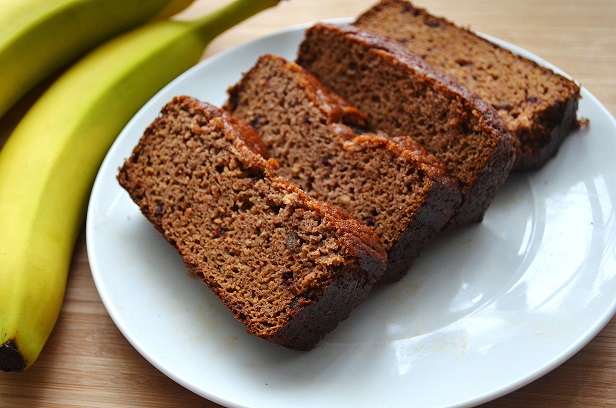
Grain Free Banana Bread
Grain free banana bread is a grain-free recipe that is anti-inflammatory and tastes great. You will love this, try it out today!
drjockers.com
Colon Cleansing: Benefits and How To Do a 3-Day Cleanse
Colon Cleansing: Benefits and How To Do a 3-Day Cleanse
In this article, you will learn about the importance of good bowel movements and how to do a 3-day colon cleansing process to reset your gut.
drjockers.com
10 Ways to Improve Stomach Acid Levels
10 Ways to Improve Stomach Acid Levels
Optimal stomach acid levels are essential for good digestion. This article goes over 10 major ways to improve stomach acid levels naturally.
drjockers.com
|

|
What Your Walking Speed Says About Your Brain Health & Dementia Risk

What Your Walking Speed Says About Your Brain Health & Dementia Risk: Tips for Maintaining a Healthy Brain
Your walking speed may reveal more about your health than you think. Discover what your walking speed says about your brain health and risk of dementia, and learn tips for promoting a healthy brain as you age.
 askdrnandi.com

Hey, Jimi!
In this episode, I am speaking with thyroid specialist, Dr. Izabella Wentz about the insights and protocols she presents in her new book, “The Adrenal Transformation Protocol”.
In this podcast,
In this episode, I am speaking with thyroid specialist, Dr. Izabella Wentz about the insights and protocols she presents in her new book, “The Adrenal Transformation Protocol”.
In this podcast,
|
|
|
|
|
|
|
|
|

|
|


I eat apricot kernels every day...
Wow, these bitter apricot kernels! When you start a new routine, and at the same time you're not stopping any other routine, when an undeniable result occurs you'll tend to attribute it to the new routine.
After eating the kernels a couple of days, I started having extraordinary long dreams of love. I don't mean the man-woman thing or romance or sexual love. I mean dreams of people and animals and time and love.
Nobody wants to hear about someone's weird dreams, but this is to illustrate what I started to experience, once the ingredients of these magical little nuggets got into my system.
In the first dream, I walked into a home, whose home I do not know, but there were all kinds of little baby animals there. Fluffy bunnies jumped into my arms, wanting to be held and petted. I know that in real life, rabbits don't want to be held until they know you really well, and even then sometimes they don't tolerate it for very long at a time. Anyway in this dream I could feel their beating hearts as they snuggled in my arms. Baby goats came and jumped up on me, the way a friendly dog will jump up on you, and in this dream their hooves hurt me, so I was saying "ouch!" But whoever was in that house said, "but they love you". There were baby sheep and little foxes. Next I saw my littlest niece when she was still a baby, around a year old. She was in her mama's arms, but she reached toward me, wanting to come to me, so I took her and held her. As she relaxed against my chest and nestled her head on my neck, I remembered the love I felt when I used to babysit her. After a while she fell asleep, so I laid her in her playpen to rest. Then the bunnies came running to me again, jumping up in my arms, black ones, white ones, gray ones. The little goats knew not to jump up and hit me with their hooves, but the little foxes wanted to climb up my legs and be petted. In real life, I don't even know if foxes have claws, but their claws hurt so I brushed them away.
I woke up feeling so happy and elevated. I immediately knew this dream effect was the result of a couple of days of eating the apricot kernels. I'm a fan for life now. I don't think they taste bad. They just don't taste great. They taste nutty, but lack the sweetness other nuts have.
I've always felt a bit intrigued by botanicals, an outcropping of the interest in gardening I suppose. I have stood in an almond grove twice in my life, once in California and once in the south of France. Both times, both places, it gave me an unparalelled sense of being in a divine spiritual realm. I know almonds and apricots are not the same plant, but they are related. If you see almonds hanging on the tree, you see they are in a fuzzy fruit that looks like an elongated light green apricot.
Wow never heard of them causing dreams, but they are very healthy for you. A lot of seeds, that most people don't eat or know they can, are very healthy for you, packed with vitamins and minerals that the body needs and doesn't get. I eat a lot of them every day. 
| ||||||||||||||||||||||||
|

Make Daily Stretching Part of Your Routine
By Dr. Oz and Dr. Roizen, MDs
In October 2008, a mare named Donnaguska entered her first race at Hawthorne Race Course in Cicero, Ill. The announcer noted that the inexperienced horse was “far, far, far, far back” at the first turn, and 15 lengths behind at the half.
But as the horses reached in the home stretch, he suddenly declared: “Here comes Donnaguska! Where did she come from?”
Special: Slim Sweets Gummies Can Help Melt 27 Lbs. in 30 Days
The late bloomer won by two and a half lengths.
A home stretch can do a lot for a filly — and an amazing amount for you too. Making a morning stretch part of your everyday routine can promote flexibility, relieve physical and emotional tension, build muscle strength, improve balance, and help prevent joints from becoming less mobile.
There are three kinds of stretches: static, dynamic, and pre-contraction.
For a static stretch, you hold a specific position that elongates a muscle for 10 to 30 seconds, and repeat three to five times, according to the National Institute for Aging.
Dynamic stretching happens when you move your arm or leg through its full range of motion (not too fast) several times.
Pre-contraction stretching means you contract the muscle you want to stretch for about 10 seconds before you do a static or dynamic stretch.
Here are some other things to remember:
• Loosen up before stretching by taking a warm shower or using heat packs, or try jumping jacks or jogging in place for three to five minutes, especially before dynamic stretching.
• Never stretch to the point of pain.
• Exhale on the stretch, inhale on the release.
By Dr. Oz and Dr. Roizen, MDs
In October 2008, a mare named Donnaguska entered her first race at Hawthorne Race Course in Cicero, Ill. The announcer noted that the inexperienced horse was “far, far, far, far back” at the first turn, and 15 lengths behind at the half.
But as the horses reached in the home stretch, he suddenly declared: “Here comes Donnaguska! Where did she come from?”
Special: Slim Sweets Gummies Can Help Melt 27 Lbs. in 30 Days
The late bloomer won by two and a half lengths.
A home stretch can do a lot for a filly — and an amazing amount for you too. Making a morning stretch part of your everyday routine can promote flexibility, relieve physical and emotional tension, build muscle strength, improve balance, and help prevent joints from becoming less mobile.
There are three kinds of stretches: static, dynamic, and pre-contraction.
For a static stretch, you hold a specific position that elongates a muscle for 10 to 30 seconds, and repeat three to five times, according to the National Institute for Aging.
Dynamic stretching happens when you move your arm or leg through its full range of motion (not too fast) several times.
Pre-contraction stretching means you contract the muscle you want to stretch for about 10 seconds before you do a static or dynamic stretch.
Here are some other things to remember:
• Loosen up before stretching by taking a warm shower or using heat packs, or try jumping jacks or jogging in place for three to five minutes, especially before dynamic stretching.
• Never stretch to the point of pain.
• Exhale on the stretch, inhale on the release.
