
Become a Patron!
You are using an out of date browser. It may not display this or other websites correctly.
You should upgrade or use an alternative browser.
You should upgrade or use an alternative browser.
Jimi's Daily Health Articles
- Thread starter Jimi
- Start date


Your Daily Motivation
Thursday
March-24-2022It's okay if you're feeling down right now. Give your emotions some space. But don't let your negative thoughts convince you that it will never get better.
That's not true. You have the power to rise up. You are capable of finding a way forward. Keep trying. Don’t be discouraged.
Even if it seems like it isn't happening exactly how you want it to, have faith that things are working themselves out.
Focus on the goodness in each moment. Your hard work will eventually pay off.
Is Imbalanced Blood Sugar Causing Your Health Problems?

Is Imbalanced Blood Sugar Causing Your Health Problems? - Dr. Natasha F
Blood sugar imbalances are rocking our nation, but not in a good way. Imbalanced blood sugar is the root of many chronic diseases
 drnatashaf.com
5 Signs Of Vitamin D Deficiency

5 Signs Of Vitamin D Deficiency
There are currently a handful of nutrients that most Americans are low in, and vitamin D is one of them. Unfortunately, this vitamin isn't something you can easily replete by eating the right foods. Learn the 5 signs of vitamin d deficiency - and what you can do! - in this article.
 myersdetox.com
How to Balance Staying Informed and Not Being Overwhelmed By Stressful News

Recognizing Symptoms of Too Much Stress
Stress is defined as a state of mental or emotional strain caused by adverse circumstances. Here are common symptoms of too much stress.
 www.healthline.com
The red-hot debate about transmissible Alzheimer's

The red-hot debate about transmissible Alzheimer's - Nature
A controversial study has suggested that the neurodegenerative disease might be transferred from one person to another. Now scientists are racing to find out whether that is true.
 www.nature.com
Study finds some of the world’s lowest dementia rates in Amazonian indigenous groups
Low dementia rates found in Amazonian indigenous groups — USC News
More evidence that healthier lifestyles may hold clues to preventing Alzheimer’s and other dementias.
 news.usc.edu
The coin toss of Alzheimer's inheritance

The coin toss of Alzheimer's inheritance
Hear the experience of Alzheimer's clinical trial participant.
www.nature.com
Inflammatory Connection Between Psoriasis + Depression w/ Fabrizio Galimberti, MD, PhD

238: Inflammatory Connection Between Psoriasis + Depression w/ Fabrizio Galimberti, MD, PhD
Psoriasis can be a very isolating condition that causes a lot of shame. My guest today will discuss how and why psoriasis can affect mental health and even lead to depression.
www.skinterrupt.com
| Hi Jimi, |
| Despite all the trillions of dollars spent in the war on cancer, it will take ten million lives this year. |
| No wonder “you’ve got cancer” are three of the most dreaded words in the English language. |
| But according to New York Times bestselling author Joel Fuhrman, MD, there is a better way. |
| (You may have seen him on Dr. Oz, Good Morning America, the Today Show, or in the Food Revolution Summit.) |
| You see, Dr. Fuhrman wrote a brand-new eBook: Joel Fuhrman’s Anti-Cancer Diet – Super Affordable Foods That Reduce Your Risk of Prostate, Breast, and Colon Cancer. |
| >> And right now, you can get it for no charge by clicking here. |
| When you download his brand-new eBook, you’ll also get complimentary access to the world premiere of Dr. Fuhrman’s Eat To Live Masterclass! This will be a series of brilliant and insight-packed seminars, in which Dr. Fuhrman will share the most powerful antiaging and anticancer secrets that he’s learned during thirty-four years of practice. |
| >> Get it all here. |
| Yours for kicking cancer and loving life, |
| Ocean Robbins |
| P.S. It turns out that certain foods are your best defense against cancer. Not chemotherapy, radiation, or surgery (which can only help, if at all, with treatment once cancer has already developed). And if you want to find out which foods have been proven to be the best at helping you fight cancer… |
| Then download Dr. Fuhrman’s Anti-Cancer Diet eBook right here. |
Vitamin D Resistance and Autoimmunity
Vitamin D Resistance and Autoimmunity
Vitamin D deficiency may play a role in autoimmunity. Vitamin D resistance occurs when you don’t see improvement despite supplementation.
 drjockers.com
Cleansing Avocado Pesto
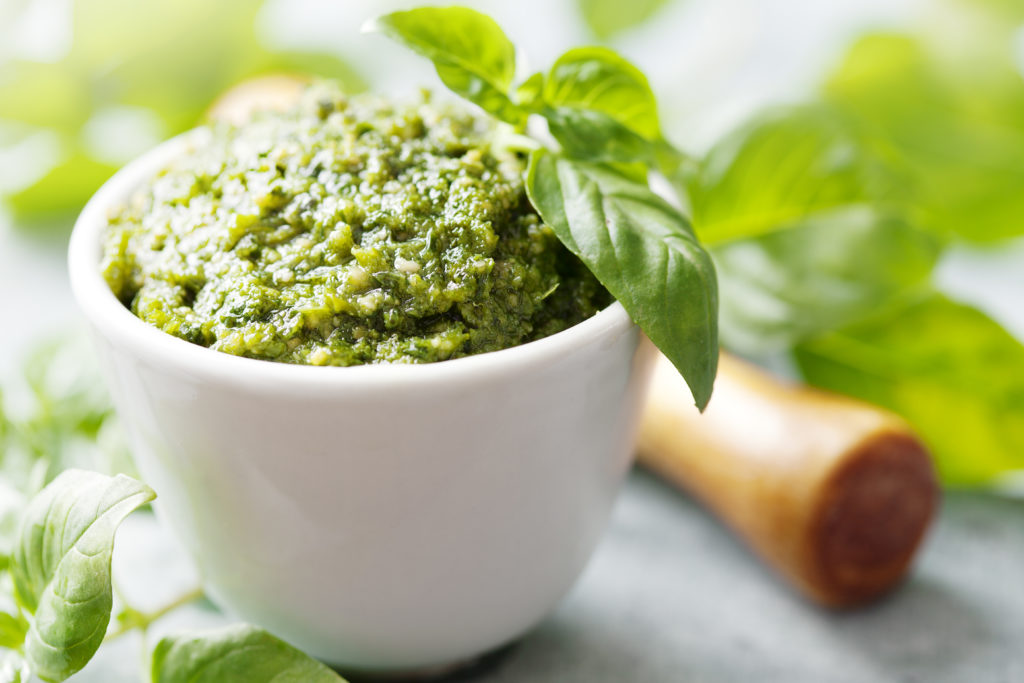
Cleansing Avocado Pesto
This avocado pesto recipe tastes amazing and is rich in anti-aging phytonutrients. Click here to get delicious and healthy pesto recipe!
drjockers.com
Pollen Allergies: Symptoms & Natural Support Strategies

Pollen Allergies: Symptoms & Natural Support Strategies
Pollen allergies cause you to feel miserable with a runny nose, coughing, watery eyes & sneezing. Discover natural strategies to feel better!
drjockers.com
| ||
|

4 Critical Ingredients that Must be With Your Turmeric
CRITICAL INGREDIENT #1:
Fermented Organic Turmeric - for healthy inflammation. Fermented turmeric is more easily absorbed by your body without any of the adverse side effects of black pepper or piperine.
CRITICAL INGREDIENT #2:
Vitamin D3 - helps maintain a healthy mood. Stress is a main cause of chronic inflammation, plus 69.5% of all Americans are deficient in Vitamin D.
CRITICAL INGREDIENT #3:
Organic KSM-66 Ashwagandha® - KSM-66 is a patented ashwagandha which is an adaptogen that helps support healthy stress levels. (Again, stress is one of the main causes of chronic inflammation.)
CRITICAL INGREDIENT #4:
Fermented Organic Ginger - Ginger and turmeric are in the same "family" and ginger is great for supporting healthy inflammation levels, PLUS it increases the bioavailability (absorption) of curcumin when taken with turmeric.
CRITICAL INGREDIENT #1:
Fermented Organic Turmeric - for healthy inflammation. Fermented turmeric is more easily absorbed by your body without any of the adverse side effects of black pepper or piperine.
CRITICAL INGREDIENT #2:
Vitamin D3 - helps maintain a healthy mood. Stress is a main cause of chronic inflammation, plus 69.5% of all Americans are deficient in Vitamin D.
CRITICAL INGREDIENT #3:
Organic KSM-66 Ashwagandha® - KSM-66 is a patented ashwagandha which is an adaptogen that helps support healthy stress levels. (Again, stress is one of the main causes of chronic inflammation.)
CRITICAL INGREDIENT #4:
Fermented Organic Ginger - Ginger and turmeric are in the same "family" and ginger is great for supporting healthy inflammation levels, PLUS it increases the bioavailability (absorption) of curcumin when taken with turmeric.
| ||
|

| ||
|

|
|
|
Seniors: Keep Moving for Brain Health
By Chauncey Crandall, M.D.
A recent study finds that aerobic exercise can improve older adults’ thinking and memory, even if they’re longtime couch potatoes.
This type of exercise increases blood flow to the brain and counters the effects of normal aging, according to the study published online for the journal Neurology.
Special: The Healing Powers of Coffee: Muscle Pain, Headaches, Weight, and More
The study included 206 adults, average age 66, with no history of memory or heart problems. For six months, they took part in a supervised exercise program three times a week.
As they progressed, their workout increased from an average of 20 minutes a day to least 40 minutes.
They were also asked to work out on their own once a week. At the end of the exercise program, participants had a 5.7% improvement on tests of executive functioning. They also had a 2.4% increase in verbal fluency, a measure of how quickly a person can retrieve information.
By Chauncey Crandall, M.D.
A recent study finds that aerobic exercise can improve older adults’ thinking and memory, even if they’re longtime couch potatoes.
This type of exercise increases blood flow to the brain and counters the effects of normal aging, according to the study published online for the journal Neurology.
Special: The Healing Powers of Coffee: Muscle Pain, Headaches, Weight, and More
The study included 206 adults, average age 66, with no history of memory or heart problems. For six months, they took part in a supervised exercise program three times a week.
As they progressed, their workout increased from an average of 20 minutes a day to least 40 minutes.
They were also asked to work out on their own once a week. At the end of the exercise program, participants had a 5.7% improvement on tests of executive functioning. They also had a 2.4% increase in verbal fluency, a measure of how quickly a person can retrieve information.

|

|
|

 GMO HAMBURGERS? FDA approves genetically engineered cows for beef production

GMO HAMBURGERS? FDA approves genetically engineered cows for beef production – NaturalNews.com
While the world is distracted by the Russia-Ukraine conflict, the U.S. Food and Drug Administration (FDA) has quietly approved gene-edited (GMO) animals to enter the food market. The FDA reportedly fast-tracked approval for genetically engineered cows to start producing transgenic beef for the...
March 21, 2022

 www.bridgitdanner.com
What Are the Best Blood Tests to Uncover Root Health Issues?
What Are the Best Blood Tests to Uncover Root Health Issues? — Bridgit Danner, Holistic Detox Coach
Having trouble getting all of the pieces of your health puzzle to fit together? You’re not alone. Many people jump from practitioner to practitioner, searching for answers to their mystery illness, only to come out empty-handed. Getting to the bottom of chronic health issues takes digging! And a hug
www.bridgitdanner.com
|
|
|
|
|
|

Your Daily Motivation
Friday
March-25-2022Everything can change for the better in a moment. Stay calm and rational. Things are coming together for you.
Let go of the need to control everything. You won't feel stuck forever. This is NOT it. This is NOT how your life is going to look like from now on.
Better days are on the way. Learn from your past experiences and see your current situation as an opportunity to reinvent yourself.
You’re bigger than your circumstances. You can ride any situation out. Cultivate your inner peace.
|


|

|
|
|

|
|
Hi, Jimi, hope you are doing well today.

Some people are skeptical of "energy healing." Some embrace it fully. Others simply don't have enough insight on it to make an assessment.
Where ever you may reside on that spectrum, if you believe that knowledge is power which may in turn benefit your health and life...
Don't miss this excellent free guide, The Healing Power of Energy, which you're getting free right here today
This 24-page guide by Dr. Christine Schaffner and Lloyd Burrell provides one of the clearest explanations I've read of what energy medicine is and the keys to how to use it.
In very brief, energy medicine holds that illness happens from the inside, when your energy gets blocked or disrupted due to a range of causes, such as physical toxins or trauma.
It stems from and may utilize components of a range of different ancient healing traditions, such as qigong, sound healing, yoga, and much more.
And, again, this new Healing Power of Energy guide does an excellent job of educating you on the "essentials" about Energy Medicine:
Head here now to download your free copy

Some people are skeptical of "energy healing." Some embrace it fully. Others simply don't have enough insight on it to make an assessment.
Where ever you may reside on that spectrum, if you believe that knowledge is power which may in turn benefit your health and life...
Don't miss this excellent free guide, The Healing Power of Energy, which you're getting free right here today
This 24-page guide by Dr. Christine Schaffner and Lloyd Burrell provides one of the clearest explanations I've read of what energy medicine is and the keys to how to use it.
In very brief, energy medicine holds that illness happens from the inside, when your energy gets blocked or disrupted due to a range of causes, such as physical toxins or trauma.
It stems from and may utilize components of a range of different ancient healing traditions, such as qigong, sound healing, yoga, and much more.
And, again, this new Healing Power of Energy guide does an excellent job of educating you on the "essentials" about Energy Medicine:
Head here now to download your free copy
Secrets of self-healing
Jimi... I’m sure you’ve heard the saying, “mind over matter.”
However, the prevailing perspective of conventional Western medicine is “matter over mind,” meaning it treats the physical symptoms of illness without addressing deeper psychological and spiritual factors.
Neither of those world-views is entirely accurate. How could they be? Both are one-sided and assume that it’s unusual for the mind to influence the body.
Today, Master Mingtong Gu would like to share with you these incredible ancient healing secrets…
...starting with the holistic mind-body-heart healing perspective of Eastern medicine, which is very different from what you might be used to!
Jim, I just read this book and needed to share it with you. It’s amazing.
-->Your gift from Master Mingtong: Get his new ebook “Ancient Healing Secrets” at no cost
You’ll learn the 5 ancient secrets that make Wisdom Healing Qigong so effective and how you can use it to empower your own health, healing, and wellbeing.
-->Download Master Mingtong’s New Ebook - Free
Enjoy!
To your health and happiness,
Joe

Jimi... I’m sure you’ve heard the saying, “mind over matter.”
However, the prevailing perspective of conventional Western medicine is “matter over mind,” meaning it treats the physical symptoms of illness without addressing deeper psychological and spiritual factors.
Neither of those world-views is entirely accurate. How could they be? Both are one-sided and assume that it’s unusual for the mind to influence the body.
Today, Master Mingtong Gu would like to share with you these incredible ancient healing secrets…
...starting with the holistic mind-body-heart healing perspective of Eastern medicine, which is very different from what you might be used to!
Jim, I just read this book and needed to share it with you. It’s amazing.
-->Your gift from Master Mingtong: Get his new ebook “Ancient Healing Secrets” at no cost
You’ll learn the 5 ancient secrets that make Wisdom Healing Qigong so effective and how you can use it to empower your own health, healing, and wellbeing.
-->Download Master Mingtong’s New Ebook - Free
Enjoy!
To your health and happiness,
Joe
Hi Jimi,
Dr. Osborne here,
Bringing this up because many of you have been asking for more information on Iodine.
My favorite formula is Ultra Iodine - a premium high potency iodine formula to support thyroid hormone synthesis, which contains 7.5 mg as potassium iodide (KI).
While we’ve all heard of iodine, it’s amazing how most people know very little about it.
In short, this nutrient is necessary to produce T3 and T4 which are thyroid hormones. These not only regulate growth, but they are vital for metabolism, generating energy, breaking down fat, and communicating with DNA about how cells are supposed to grow, heal, and repair.
In history, potassium iodide has also been used for its ability to effectively block radioactive iodine from being absorbed through the thyroid glands. During the nuclear disaster at the chemical plant in Fukushima, those exposed showed higher thyroid cancer rates, years after the exposure.
Because of catastrophic situations such as Fukushima, it was learned that taking potassium iodide could saturate the thyroid gland with the non-radioactive version and it could potentially help to prevent, or at least reduce the intake of the negative toxic exposure into the thyroid glands.
Dr. Osborne here,
Bringing this up because many of you have been asking for more information on Iodine.
My favorite formula is Ultra Iodine - a premium high potency iodine formula to support thyroid hormone synthesis, which contains 7.5 mg as potassium iodide (KI).
While we’ve all heard of iodine, it’s amazing how most people know very little about it.
In short, this nutrient is necessary to produce T3 and T4 which are thyroid hormones. These not only regulate growth, but they are vital for metabolism, generating energy, breaking down fat, and communicating with DNA about how cells are supposed to grow, heal, and repair.
In history, potassium iodide has also been used for its ability to effectively block radioactive iodine from being absorbed through the thyroid glands. During the nuclear disaster at the chemical plant in Fukushima, those exposed showed higher thyroid cancer rates, years after the exposure.
Because of catastrophic situations such as Fukushima, it was learned that taking potassium iodide could saturate the thyroid gland with the non-radioactive version and it could potentially help to prevent, or at least reduce the intake of the negative toxic exposure into the thyroid glands.
Joe Biden warns of looming food shortages coming to America as occupying regime commits economic suicide

Joe Biden warns of looming food shortages coming to America as occupying regime commits economic suicide – NaturalNews.com
The non-elected, criminally-installed “fake” president Joe Biden is now warning about food shortages coming to America. At a press conference held in Brussels yesterday, he answered questions from reporters about food security. One reporter asked, “Can you say whether there’s the conversation is...
COVID vaccine coordinator who aggressively pushed mRNA shots dies “unexpectedly” – was it the jab?

COVID vaccine coordinator who aggressively pushed mRNA shots dies “unexpectedly” – was it the jab? – NaturalNews.com
Dr. SarahBeth Hartlage, Louisville’s Wuhan coronavirus (COVID-19) “vaccine” coordinator, has “died unexpectedly,” according to reports. And the weird part is that nobody is saying why. Hartlage was an aggressive proponent of mRNA (messenger RNA) injections, urging people online, in person, and...
CLIMATE LOCKDOWN: Globalists are exploiting oil price spikes to push for greater population control with “10-point plan” that includes bans on travel

CLIMATE LOCKDOWN: Globalists are exploiting oil price spikes to push for greater population control with “10-point plan” that includes bans on travel – NaturalNews.com
The globalists, like the Democrat Party in the U.S., never lets a good crisis go to waste, using each one to push their agenda of suppression and population control just a little further down the field. In a “10-Point Plan to Cut Oil Use” – a long-held objective of the globalists is to get rid […]
Dr. David Martin: We are allowing human organisms to become bioweapon factories

 www.brighteon.com
Dr. David Martin: We are allowing human organisms to become bioweapon factories
Mirror. Source Dr. David Martin: We Are Allowing Human Organisms To Become Bioweapon Factories https://rumble.com/vy9wm1-dr.-david-martin-we-are-allowing-human-organisms-to-become-bioweapon-factor.html Quote: "The Covid mandates are tools for desensitizing people to extensive gene editing and...

Globalists Aim to Take Over Health Systems Worldwide
Globalists Aim to Take Over Health Systems Worldwide
The globalist cabal is planning to monopolize health systems worldwide, and that plan is already underway
Hey, Jimi!
In this episode, I am speaking with Chris Masterjohn, PhD about some serious questions and worrying holes that appear in the C19 data-sets we have been asked to put our faith in. He has an extremely unique perspective on this question (from digging into the research like no one else has!) that needs to be heard and demands a response. Dr. Masterjohn is, in my experience, one of the most brilliant minds there is when it comes to really digging into the details of huge volumes of research and putting the pieces together.
In this podcast, Dr. Masterjohn talks about:
In this episode, I am speaking with Chris Masterjohn, PhD about some serious questions and worrying holes that appear in the C19 data-sets we have been asked to put our faith in. He has an extremely unique perspective on this question (from digging into the research like no one else has!) that needs to be heard and demands a response. Dr. Masterjohn is, in my experience, one of the most brilliant minds there is when it comes to really digging into the details of huge volumes of research and putting the pieces together.
In this podcast, Dr. Masterjohn talks about:
- Why data which relies on PCR tests may not be a valid or useful as most believe
- Why the vast majority of people (over 75%!) who got sick with “CV-like illness” (based on symptoms) were totally excluded from the key trials used to authorize the jabs.
- How the jabs may be changing the way a person tests on a PCR test rather than reducing their chance of getting sick (and what is “CV-like illness”?) (The data shows they are highly effective at reducing PCR-test positive CV-like illness, but is very clear that they have no effect on total CV-like illness. How could this be?)
- How it can be that the data presented by pharmaceutical companies ignores 95% of those who reported being sick during the trials with “CV-like illness” but tested negative on a PCR test. (And how including – rather than excluding – the 95% of people with CV-like illness who tested negative dramatically transforms the data!)
- What looking at all-cause mortality across the world can tell us about the effectiveness of these jabs. (Have total deaths changed in countries that have injected 75-95% of their population?)
- Chris’ fascinating hypothesis about exactly how the jabs could be so effective at reducing PCR-test positive CV-like illness, but not total CV-like illness.
- Jab safety, side-effects and the best way to consider the VAERS in the light of its imperfections
- Chris’ exact recommendations for preventing and fighting CV19 (and other viral infections) from a nutritional point of view and now available in his new guide.
→ You can watch/listen to the podcast HERE
Yours in health,
Study: High Artificial Sweetener Intake Linked to Increased Cancer Risk
Read Newsmax: Study: High Artificial Sweetener Intake Linked to Increased Cancer Risk | Newsmax.com
Urgent: Your Heart Attack Risk Determined Online - More Info

 www.newsmax.com
Read Newsmax: Study: High Artificial Sweetener Intake Linked to Increased Cancer Risk | Newsmax.com
Urgent: Your Heart Attack Risk Determined Online - More Info
Study: High Artificial Sweetener Intake Linked to Increased Cancer Risk
"Sugar-free" might sound healthy, but a new study hints that people who consume a lot of artificial sweeteners may face a slightly higher cancer risk. Experts stressed that the findings do not prove sugar substitutes are the culprit. But they said it is wise for people to...
|
|
|
|
Hi Jimi, hope you are doing well today.
You are likely quite familiar with the juicy deliciousness of mangoes...
However, it pays to know just how "super" the various parts of this true superfood really are, and you're about to discover that in...
The 11 Surprising Benefits of Mangoes, my brand-new research-based article for YOU!
If you appreciate this article, please do leave a COMMENT at the bottom of the page.
Because in it, you're about to discover:
You are likely quite familiar with the juicy deliciousness of mangoes...
However, it pays to know just how "super" the various parts of this true superfood really are, and you're about to discover that in...
The 11 Surprising Benefits of Mangoes, my brand-new research-based article for YOU!
If you appreciate this article, please do leave a COMMENT at the bottom of the page.
Because in it, you're about to discover:
- The powerful benefits of mangoes for your health and longevity
- The unique benefits of mangoes if you want younger-looking skin
- A bit of interesting background info on this long-cherished "drupe"
- The proper (and safe) way to cut a mango
- And more!
Your Daily Motivation
Sunday
March-27-2022What you think of yourself is more important than what others think of you. Be honest about your priorities with yourself.
Unless you are honest with yourself you can never find true fulfillment or go after what you really want. Develop a strong belief in yourself.
Observe your inner reactions to the experiences you have without any judgment. Learning to really see yourself in an honest way is challenging, but the hard work is worth it in the long run.
Being true to yourself allows you to fully experience everything that life has to offer. You do have the courage to be honest with yourself.
